Guppy Tank Setup: Water, Filter, and Stocking Done Right
Picture this: you buy six guppies on a Saturday afternoon. They look healthy in the shop. By Wednesday, three are dead and the rest are gasping at the surface. You did nothing obviously wrong. The tank was set up. The water was treated. The filter was running.
What killed them was invisible — an uncycled tank, a filter creating too much current, or parameters that looked fine but weren’t. This guide covers exactly what a guppy tank needs, with specific equipment and numbers, so that doesn’t happen to you.
Tank Size, Temperature, and the Parameters That Actually Matter
Guppies are forgiving fish, but they need stable water more than they need perfect water. That distinction matters a lot when you’re starting out.
The minimum workable tank size for guppies is 10 gallons. Not because they physically need the space — they don’t — but because small tanks swing in temperature, pH, and ammonia much faster than larger ones. A 10-gallon tank gives you enough buffer to fix a problem before it becomes a crisis. A 5-gallon bowl does not.
Here’s the full parameter table. Test every one of these before you add a single fish, and test weekly once the tank is running:
| Parameter | Target Range | What Happens Outside It |
|---|---|---|
| Temperature | 72–82°F (22–28°C) | Below 68°F causes immune suppression and ich outbreaks |
| pH | 7.0–7.8 | Below 6.5 or above 8.5 causes fin deterioration and chronic stress |
| Hardness (GH) | 8–12 dGH | Too soft leads to color fading and breeding failure |
| Ammonia | 0 ppm | Any reading above 0 damages gills within 24 hours |
| Nitrite | 0 ppm | Toxic even at 0.25 ppm — acts like carbon monoxide for fish |
| Nitrate | Under 20 ppm | Above 40 ppm causes chronic stress and shortened lifespan |
Guppies originate from the Caribbean and parts of northern South America, where water tends toward alkaline and moderately hard. Most UK and US tap water falls in an acceptable range — but test yours before assuming. The API Freshwater Master Test Kit ($30–$35) is the right tool for this. Strip tests sold cheaply online are unreliable enough that they’ll give you false confidence at exactly the wrong moment. Liquid tests only.
Which heater to buy
The Eheim Jager 50W ($20–$25) is the standard recommendation for tanks up to 15 gallons. It’s accurate to within 0.5°F, fully submersible, and built to last years. The Fluval E50 ($35–$40) adds a digital temperature display if you want a constant readout. Both are solid choices. Avoid cheap no-name heaters — thermal inconsistency in a low-quality heater is one of the most common causes of unexplained overnight guppy death, and it’s nearly impossible to diagnose after the fact.
Stocking ratios that prevent female deaths
Six to eight adult guppies in a 10-gallon tank is the comfortable limit. In a 20-gallon, you can push to 12–15. The male-to-female ratio matters more than most guides bother to mention: keep at least two females per male, ideally three. Male guppies relentlessly pursue females for breeding, and an outnumbered female in a small tank can be harassed to the point of exhaustion and death. Not an exaggeration — it’s a documented and common cause of female guppy mortality in beginner setups.
Cycling the Tank: The Step That Makes or Breaks Everything

The nitrogen cycle is the single most important concept in fishkeeping. Skip it and you will lose fish. Understand it and guppy keeping becomes genuinely straightforward.
Here’s what happens inside every tank: fish produce ammonia through waste and respiration. Ammonia is toxic at any detectable level. Over 4–8 weeks, beneficial bacteria — primarily Nitrosomonas and Nitrospira species — colonize your filter media and substrate, converting ammonia into nitrite (still toxic), then nitrite into nitrate (manageable through regular water changes). Until that bacterial colony establishes, your tank cannot safely house fish.
A new tank has zero beneficial bacteria. Which means you cannot buy a tank on Saturday and add fish on Sunday.
Fishless cycling — the method that actually works
Fill the tank, run the filter and heater, and add an ammonia source. Pure clear ammonia from a hardware store works — look for a product with no surfactants (it should produce no bubbles when shaken). Dose enough to bring the reading to 2–4 ppm. Alternatively, drop a small pinch of fish food in every two days and let it decompose. Slower, but it works.
Test every two to three days with your API Master Test Kit. You’re watching for a specific sequence:
- Ammonia climbs, then starts falling as the first bacterial colony establishes
- Nitrite appears and climbs — sometimes very high, don’t panic
- Nitrite falls toward 0 as the second bacterial colony develops
- Nitrate begins climbing steadily
When ammonia reads 0, nitrite reads 0, and nitrate is present, your tank is cycled. Add Seachem Prime ($10–$12 for 100ml) at every water change throughout the process — it dechlorinates tap water and temporarily neutralizes ammonia and nitrite, giving you a margin of safety during the cycling period and every water change thereafter.
How to accelerate the cycle
Seachem Stability ($10–$15) is the most consistently effective bottled bacteria product available. Dose it daily for the first week alongside your ammonia source. It won’t eliminate the cycling process, but it can compress a 6-week cycle down to 2–3 weeks in many cases. API Quick Start ($8) is a comparable alternative at a lower price point.
The fastest method is getting established filter media from an already-running tank. A handful of seeded sponge, some bio-balls, or a scoop of gravel from a friend’s aquarium or a local fish store — these transfer a living bacterial colony directly into your new setup and can produce a cycled tank in 7–10 days. If you know anyone with a running freshwater aquarium, asking for this is genuinely worth it.
The mistake that trips up even patient fishkeepers
Someone waits the full 6 weeks, tests correctly, confirms the cycle is complete — then does a thorough filter cleaning on day 42. They rinse everything under the tap. Chlorine in tap water kills beneficial bacteria within minutes. The cycle crashes instantly. Always rinse filter media in old tank water removed during a water change, never tap water. This is the rule that experienced fishkeepers still occasionally break.
The Right Filter for Guppies
Guppies need filtration. They also dislike strong water current. Most beginner setups fail exactly here, by defaulting to whatever filter came packaged in a starter kit without adjusting the flow rate.
The best filter for a guppy tank is a sponge filter. The Hikari Bacto-Surge Sponge Filter ($8–$12) or the Penn Plax Cascade Sponge Filter ($6–$9) run off a basic air pump, create gentle circulation without directional current, deliver excellent biological filtration, and cannot suck up guppy fry. If you plan to breed guppies at any point, sponge filters aren’t optional — impeller-driven hang-on-back filters will pull baby fish into the intake before they have a chance.
For a 20-gallon setup or larger, or if aesthetics matter and you want something less visible, the AquaClear 20 ($35) is the best hang-on-back option for guppies. Set the flow to its lowest position. That’s the only adjustment required. The Marineland Penguin Bio-Wheel filters are functional but produce more surface turbulence than guppies want, and the bio-wheel becomes noisy once mineral deposits build up on the bearing — which they will.
What to skip entirely: internal power filters with flow rates above 100 GPH in a 10-gallon tank. Guppies forced to fight current all day become chronically stressed and their immune systems weaken. The fish look fine for a few weeks, then start dying from bacterial infections that a healthy fish would shrug off. The filter is rarely blamed, but often responsible.
What to Put Inside: Plants, Substrate, and Décor
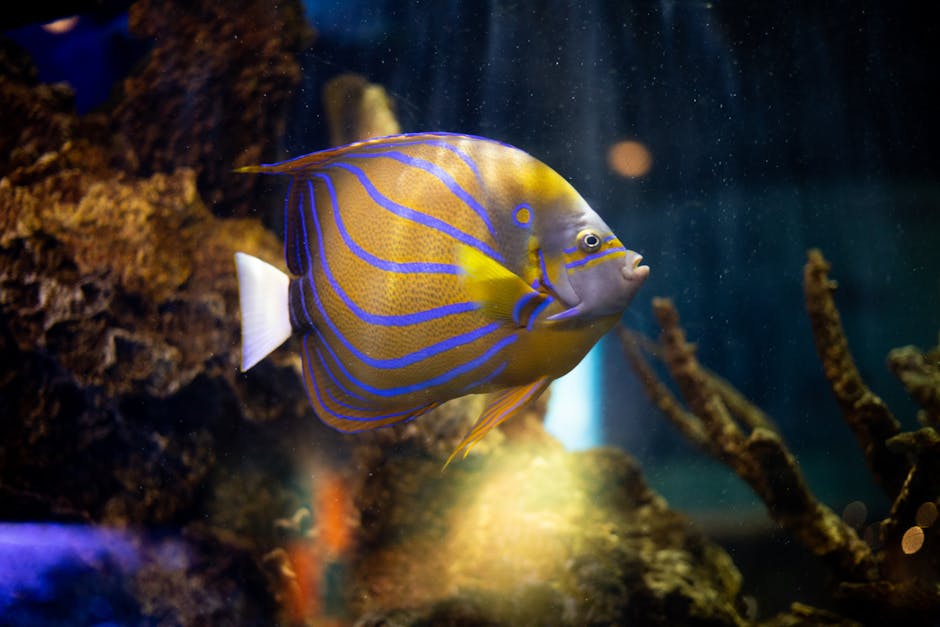
The interior of the tank affects guppy health more directly than most beginners expect. Plant cover reduces male aggression, gives females escape routes, provides fry with hiding spots, and actively improves water quality by absorbing nitrates. A heavily planted tank with decent water changes and modest feeding will maintain better parameters than a bare tank with the same maintenance schedule.
Substrate options
For a planted guppy tank, two substrates stand out:
- Fluval Plant and Shrimp Stratum ($20–$25 for 4kg): excellent for plant root development, lightweight, slightly acidic — monitor pH if your tap water is already on the soft side
- CaribSea Eco-Complete ($25–$30 for 20lbs): nutrient-rich volcanic basalt, doesn’t shift pH significantly, good for a wide range of plant species
Plain aquarium gravel works fine if you’re keeping low-tech plants or going artificial. Make sure edges are smooth — sharp gravel abrades fish that feed near the bottom.
Best plants for a guppy tank
Prioritize fast growers. They outcompete algae for nutrients, consume nitrates, and fill out the tank quickly enough to provide real cover:
- Java moss — practically indestructible, guppy fry hide in dense mats of it and survival rates improve noticeably
- Hornwort — grows aggressively fast, can be floated or rooted, absorbs nitrates at a rate that genuinely improves test results
- Water wisteria — mid-ground plant with lush coverage, extremely forgiving of inconsistent lighting and dosing
- Amazon sword — background centerpiece, wide leaves guppies shelter under during rest
- Frogbit or duckweed (floating) — top-layer cover that also reduces light intensity reaching lower plants, which slows algae growth
A basic liquid fertilizer like Seachem Flourish ($10–$15) dosed once a week keeps live plants growing without overloading the tank with excess nutrients. One pump per 10 gallons, once weekly. Nothing more complicated than that.
Lighting schedule
Six to eight hours per day on a timer. Not more. Constant light causes algae blooms and disrupts the fish’s day-night rhythm. A mechanical outlet timer costs $8–$10 and removes this entirely from your mental load.
When Guppies Start Dying: The Real Causes
Why are they gasping at the surface?
Either low dissolved oxygen or ammonia poisoning. Test the water first. If ammonia reads above 0.25 ppm, do a 30–50% water change with Prime-treated tap water immediately. If all parameters are clean, add an air stone — a basic air pump with an air stone increases surface agitation and dissolved oxygen significantly, and the whole setup costs under $10.
Why are fins rotting or clamping?
Almost always water quality, not a primary disease. Fin rot is a secondary bacterial infection that takes hold when fish are immunocompromised by poor parameters. Two water changes in one week while correcting the underlying parameter issue will often stop it without any medication. If fin rot continues beyond 7 days of clean water, Seachem Paraguard ($15) treats bacterial and fungal infections without crashing your biological filtration the way broad-spectrum antibiotics can.
Why are females dying but males are fine?
Overbreeding stress. Female guppies can give birth every 28–30 days and are continuously receptive when males are present. In a tank with too many males, females get pursued without rest, stop eating, weaken, and die. The fix is the stocking ratio — no more than one male per two females — combined with enough plant cover that a female can break line of sight and rest. If you have surplus males and can’t rehome them, a separate male-only display tank is a legitimate and common solution.
Which fish can live with guppies?
Reliable tankmates: Corydoras catfish (bottom dwellers, peaceful, occupy a completely different zone in the water column), small rasboras like Ember or Chili Rasboras, and Nerite snails which also control algae. Tiger barbs are incompatible — they will nip guppy tails to shreds within 48 hours, no exceptions. Betta fish are a gamble that depends entirely on the individual betta’s temperament; some tolerate guppies indefinitely, others kill them within a day. Don’t bet a small tank on favorable odds.
Related Post
How to Stop My Cat From Peeing on My Bed: 8 Vet-Verified Tips & Tricks
Picture this scene—you’re home after a long day at work and finally ready to slip [...]
10 Benefits of Having a Cat in Your Life
You probably don’t have to tell any of the 37 million American households with at [...]