Taking Your Cat on a Train: Carriers, Calm and Practical Rules
Taking your cat on a train can work well, but only if you treat the carrier as a safety system rather than a piece of luggage. Check the operator’s rules first, train the cat before departure, and keep the journey boring.
Choose the carrier for the train, not the pet shop
My pick for most train journeys is a stable soft-sided carrier with a rigid base, top access and a privacy panel. It fits more seating areas than a large plastic kennel, weighs less on stairs, and gives you a way to block flashing lights and crowds. A backpack is convenient for the owner but often moves too much for the cat. A flimsy fabric bag is worse: it can collapse, tip over or open at a stressed moment.
Three real carriers worth comparing
The Sleepypod Air costs $214.99 from the manufacturer, weighs about 4.5 pounds with its privacy shield and expands from 16 to 22 inches long. It has a stiff base, top and side entry, washable bedding and a privacy panel. It is the premium choice for a nervous cat and a long trip, but the price is excessive for one short local ride.
The Sherpa Original Deluxe Medium measures about 17 x 11 x 10.5 inches and suits a smaller cat that fits comfortably inside. Its soft sides and shoulder strap make it easy to carry through a station. The tradeoff is less structural support than a hard kennel, so check the frame, zippers and base before every trip.
The Petmate E-Z Load Two Door in the small size measures 19 x 10 x 13 inches and offers front and top entry. Its plastic shell is easier to disinfect after an accident, and the top door helps when a cat refuses to walk out. It is heavier and may not fit under a seat on systems with tight dimensions.
Measure the cat, then measure the route
Measure from the cat’s nose to the base of the tail, then from the floor to the top of the head while standing. The cat should be able to turn around, sit without pressing against the roof and lie down naturally. Do not buy based on weight alone. A long, slim cat can need more floor length than a heavier compact cat.
Then measure the carrier’s outside dimensions. Operators use the outside measurement, including handles, wheels and bulging fabric. For Amtrak, a carrier that exceeds 19 x 14 x 10.5 inches can fail even if the cat fits well. For a large cat that cannot fit safely, the right verdict is simple: do not force the rail trip into a tiny carrier. Use a car, arrange a pet transport service, or delay the journey.
Build the departure checklist around failure points
A good train trip is mostly preparation. Pack for the mess you hope will not happen.
Pack these items in one reachable bag
- A copy or screenshot of the pet reservation and operator rules.
- Vaccination and microchip information, plus the veterinarian’s contact details.
- Two absorbent pads, two small towels, paper towels, waste bags and unscented wipes.
- A small water dish or squeeze bottle and a familiar treat.
- A spare collar with identification and a harness if the cat already accepts one.
- A lightweight blanket for privacy and temperature control.
- A sealed container of the cat’s normal food for delays, not a large new meal.
- A foldable litter tray and a small amount of familiar litter for a long journey or overnight stay.
Time food, water and station movement carefully
Feed a normal or slightly smaller meal a few hours before departure rather than giving a large breakfast immediately before boarding. Offer water before leaving and again during a long delay if the cat will drink. Do not experiment with new food, calming chews or supplements on travel day.
Arrive early enough to find the platform without sprinting, but do not spend an unnecessary hour in a loud station. Keep the carrier closed and supported from underneath. Do not attach it to a rolling suitcase if the carrier swings or bumps into people. If you need to move through a crowd, carry it close to your body with two hands.
Check the temperature around the carrier. Direct sun, blocked mesh and a heavy blanket can create overheating quickly. At the same time, do not place the carrier beside a cold train door or air-conditioning vent. The best position is level, shaded and stable.
Keep the cat inside the carrier on the train
Do not open the carrier because the cat is crying. A frightened cat can escape through a station door, under a seat or onto the track area faster than you can react. Most cats settle more safely when the carrier stays closed, level and partly covered.
Make the carrier a quiet den
Place the carrier under the seat or in the location required by the operator. Keep the door facing you so you can check the cat without opening it. A towel over one side reduces visual noise, but never cover the ventilation panels. Keep your bags away from the mesh and do not stack luggage on top.
Do not place the carrier on a passenger seat unless the railway specifically allows it. National Rail prohibits animals on seats, and Amtrak requires the carrier to remain under the passenger’s seat or in the designated foot space. These rules also reduce the chance that the carrier tips during braking or a crowded boarding process.
Handle attention from other passengers
Some people will want to touch the cat or look inside. Say no. The cat does not need strangers tapping the mesh, children pressing their faces against the carrier or a neighboring dog sniffing the door. Keep a short sentence ready: “She is traveling, so please give her space.” Move seats if another animal is agitated or if the noise becomes constant.
Do not punish vocalizing. Speak once in a calm voice, then let the cat rest. Repeatedly opening the carrier, calling the cat’s name or moving it from floor to lap adds stimulation without solving the cause.
What should you do if the cat cries, vomits or soils the carrier?
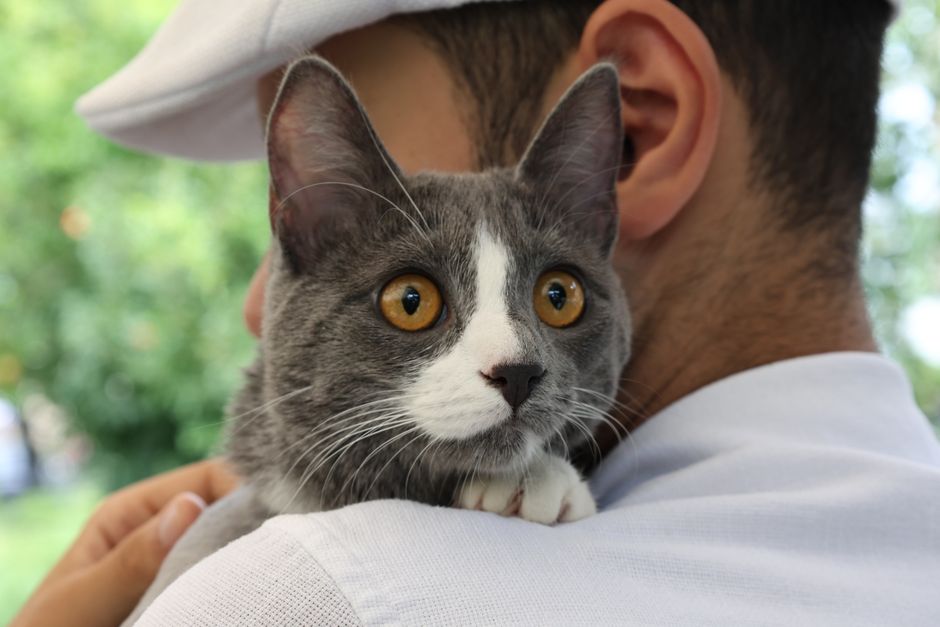
These problems are common enough to plan for and serious enough to watch closely. The response depends on the symptom, the cat’s breathing and the remaining travel time.
What if the cat cries for the whole journey?
Check the carrier position, airflow, temperature and noise first. Covering one side may help, but do not seal the carrier. Keep your movements slow and avoid repeated reassurance. If the cat is alert, breathing normally and not injuring itself, crying alone is usually a stress signal rather than an emergency. Speak with your veterinarian before the next journey about behavior training or a tested medication plan.
What if the cat vomits or has diarrhea?
Do not open the carrier in a public area. Move to a quiet, secure space only if the train staff can direct you to one and the carrier can remain fully controlled. Use the spare pad and towel through the carrier door if possible. Do not force food. Offer a small amount of water only if the cat is settled and the operator allows a safe stop.
When should you stop the trip?
Seek urgent veterinary help if the cat has open-mouth breathing, blue or pale gums, collapse, repeated vomiting, severe weakness, uncontrolled bleeding or extreme heat exposure. Call the train operator before an emergency stop so staff can help you leave safely. A cat that remains distressed despite preparation may not be a good candidate for rail travel. The correct fix may be a different route, a private vehicle or postponement.
Know when a train is the wrong choice
A train is not automatically kinder than a car. It removes driving stress but adds platforms, announcements, crowds, transfers and limited control over temperature and stops.
Choose another option for these cats
- A cat with uncontrolled breathing disease, severe motion sickness or a recent illness needs veterinary clearance before any journey.
- A cat that panics in a carrier, injures its face against the door or cannot recover after short practice sessions should not be pushed onto a crowded train.
- A journey with several transfers, an overnight segment or a long border crossing may create more risk than a direct car trip.
- A large cat that cannot stand, turn and lie down comfortably inside the approved carrier needs a different travel plan.
The clear verdict
For a healthy cat that can rest in a correctly sized carrier, a direct train with one person and no transfer is the best rail setup. For a fearful cat or a route with multiple changes, a private car usually gives you better control over noise, temperature, breaks and emergency care. Do not choose the train because the ticket is cheaper if the carrier is too small or the cat has not been trained.
The winning plan is boring: verify the exact operator rule, reserve the pet space, practice the carrier, pack cleaning supplies and keep the cat contained from your front door to the destination.
Medical Disclaimer: This content is for informational purposes only and does not constitute medical advice. Always consult a qualified healthcare professional before making health-related decisions.
Related Post
Best Bird Cage Brands: Bird Cage Brands That Are Actually Worth Buying
A budgie placed in a cage with zinc-coated bars can develop heavy metal toxicity within [...]
A Hotel-Friendly Dental Routine for Dogs
A tidy, repeatable oral-care plan for dogs staying in hotels and holiday rentals, including sizing, [...]