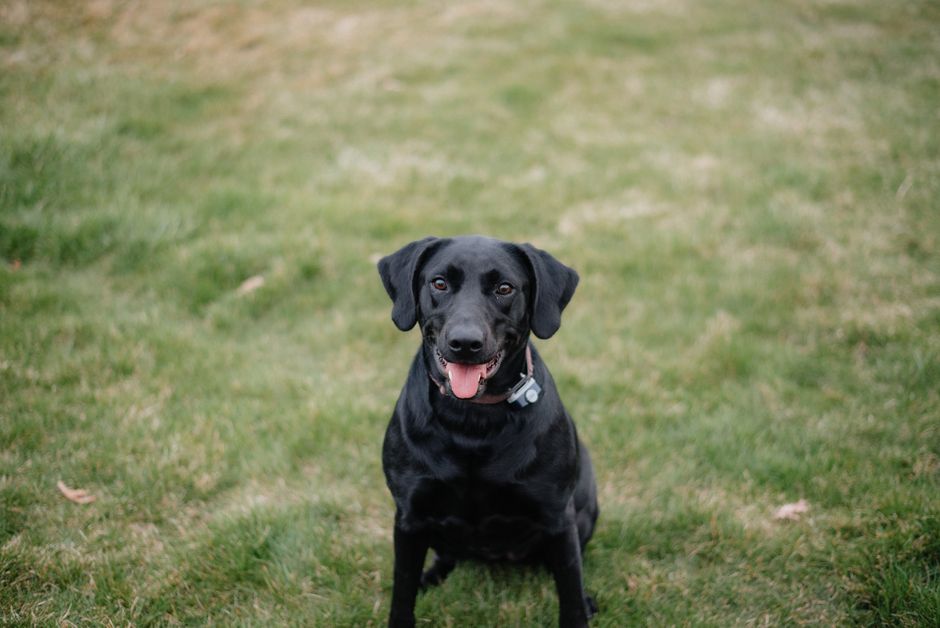
The Post-Outing Skin Check Every Dog Holiday Needs
A day near salt water, meadow grass or dusty paths can be brilliant for a dog, but the useful part of the evening begins before the lead is hung up. Five quiet minutes can reveal what the excitement of the walk concealed.
Pet-friendly breaks change a dog’s environment all at once. There may be unfamiliar plants beside the cottage, sand between the toes, a different laundry product on the hotel blanket, or a long afternoon in warm air. None of those automatically means trouble. They simply make a consistent return-to-room routine more valuable than waiting until a dog is obviously uncomfortable.
Start with what the walk actually involved
A beach morning calls for a different check from a woodland afternoon. After sand and sea, rinse paws and the lower coat with fresh water, then dry carefully between the toes. After long grass, look for awns, burrs and tiny plant fragments around the feet, armpits and ears. On a paved town day, feel the pads for heat, roughness or anything lodged in the grooves. The point is not to diagnose; it is to notice.
Begin while your dog is calm and standing naturally. Run both hands along the coat so you learn what is normal on that day. Part the hair only where you can do so comfortably. Compare left and right paws, and pay attention to repeated licking, head shaking or flinching. A single scratch can be ordinary. A pattern, especially one that continues after the dog has settled, deserves more attention.
The five-minute room check
- Paws: look between toes, around nails and across each pad; remove only loose surface debris that comes away easily.
- Lower legs and belly: check areas that brushed through grass, sand or low plants.
- Ears and face: notice new redness, discharge, swelling or persistent rubbing without inserting anything into the ear canal.
- Harness and collar lines: damp webbing and trapped grit can rub where straps sit close to the body.
- Behaviour: record unusual licking, chewing, restlessness or reluctance to be touched.
Use a clean towel for the dog rather than a fragranced hotel towel if you know your pet is sensitive to detergents. Dry, do not scrub. If a harness is wet, swap it for a dry one indoors and let the first air completely. A compact travel brush, a small fresh-water bottle and one labelled towel solve more practical problems than an overflowing grooming bag.
Photographs can help when something looks different. Take one in natural light and include a familiar object for scale. Do not repeatedly handle a sore area to obtain a perfect picture. The image is simply a reference for your own comparison or for a veterinarian if advice is needed.
Where a daily skin-support product fits
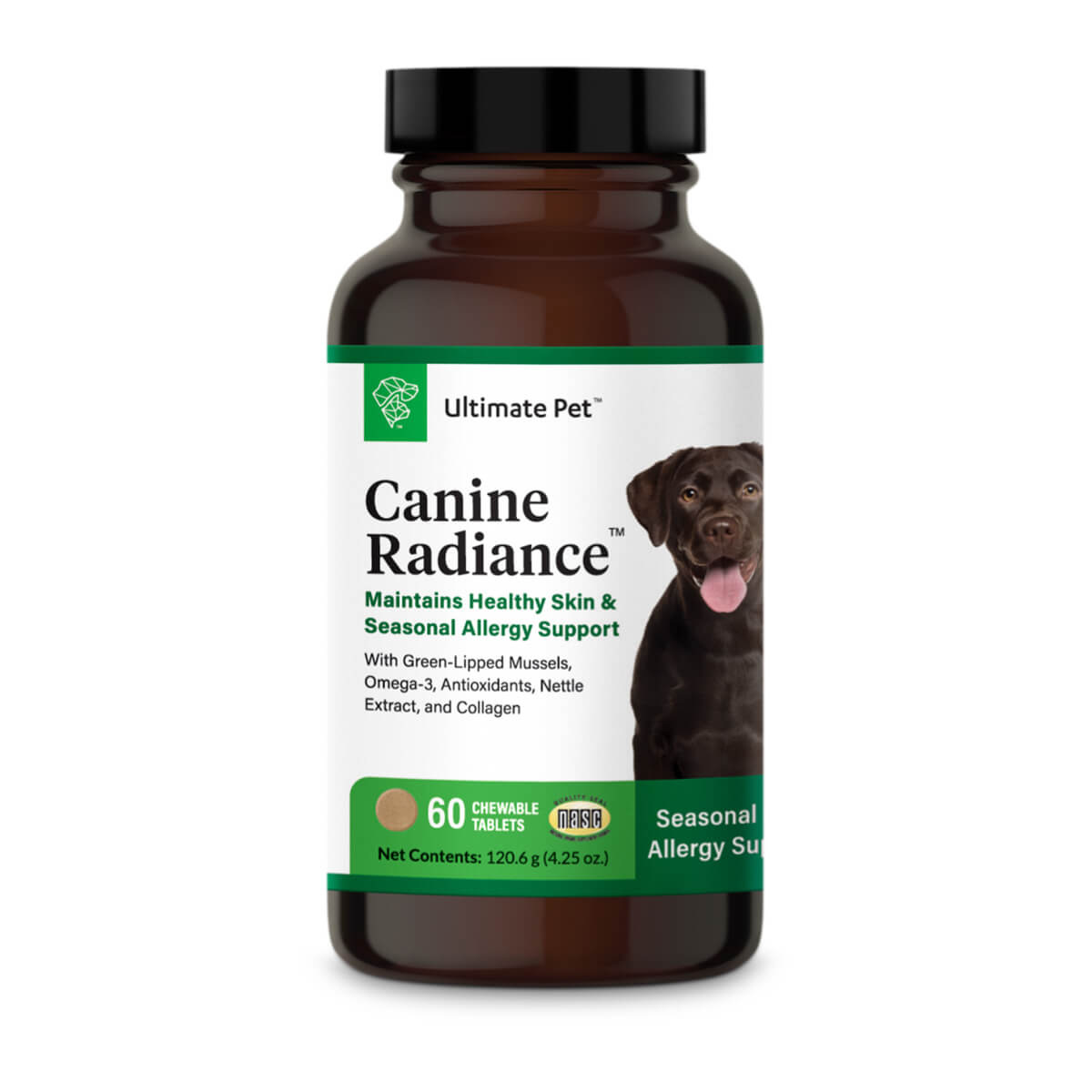
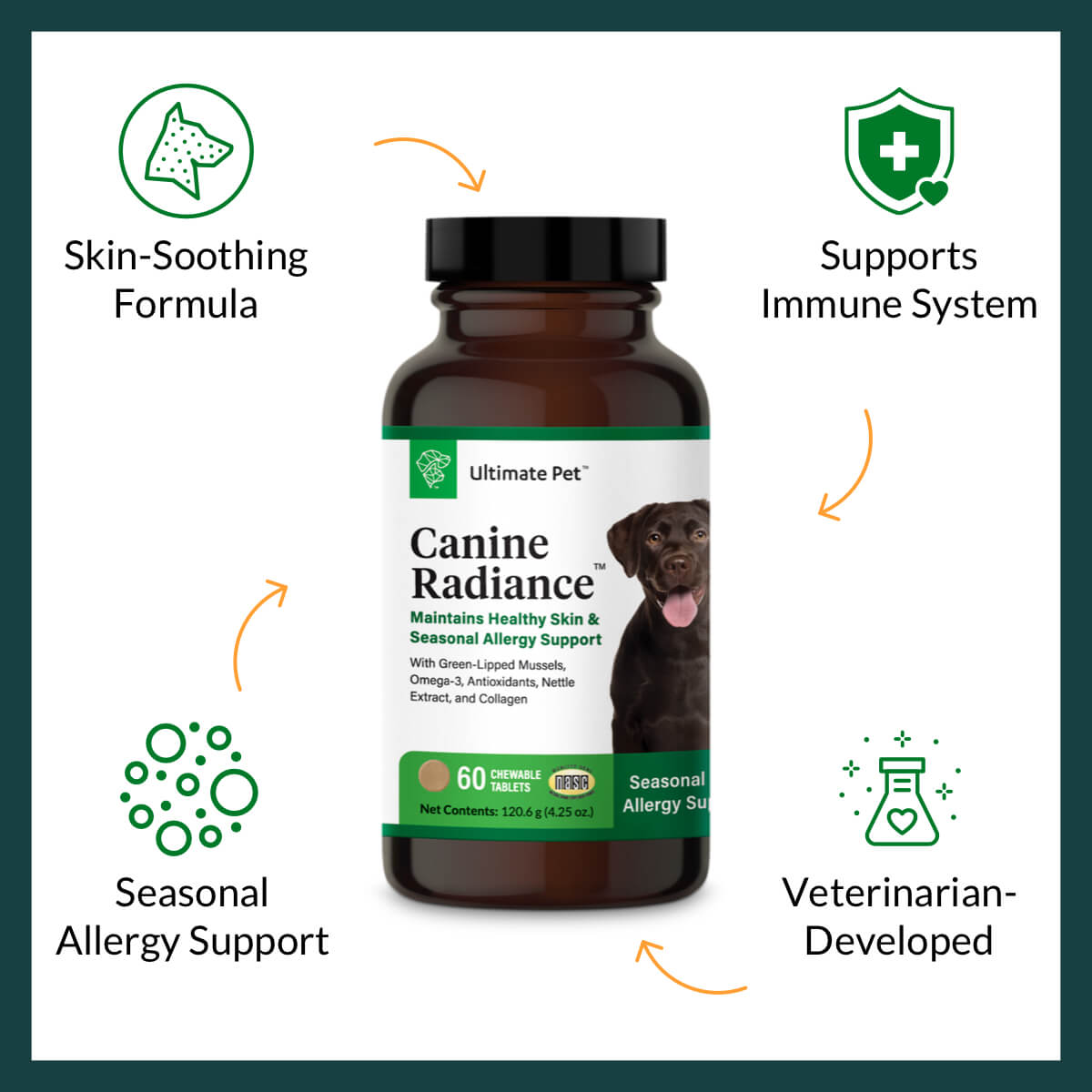
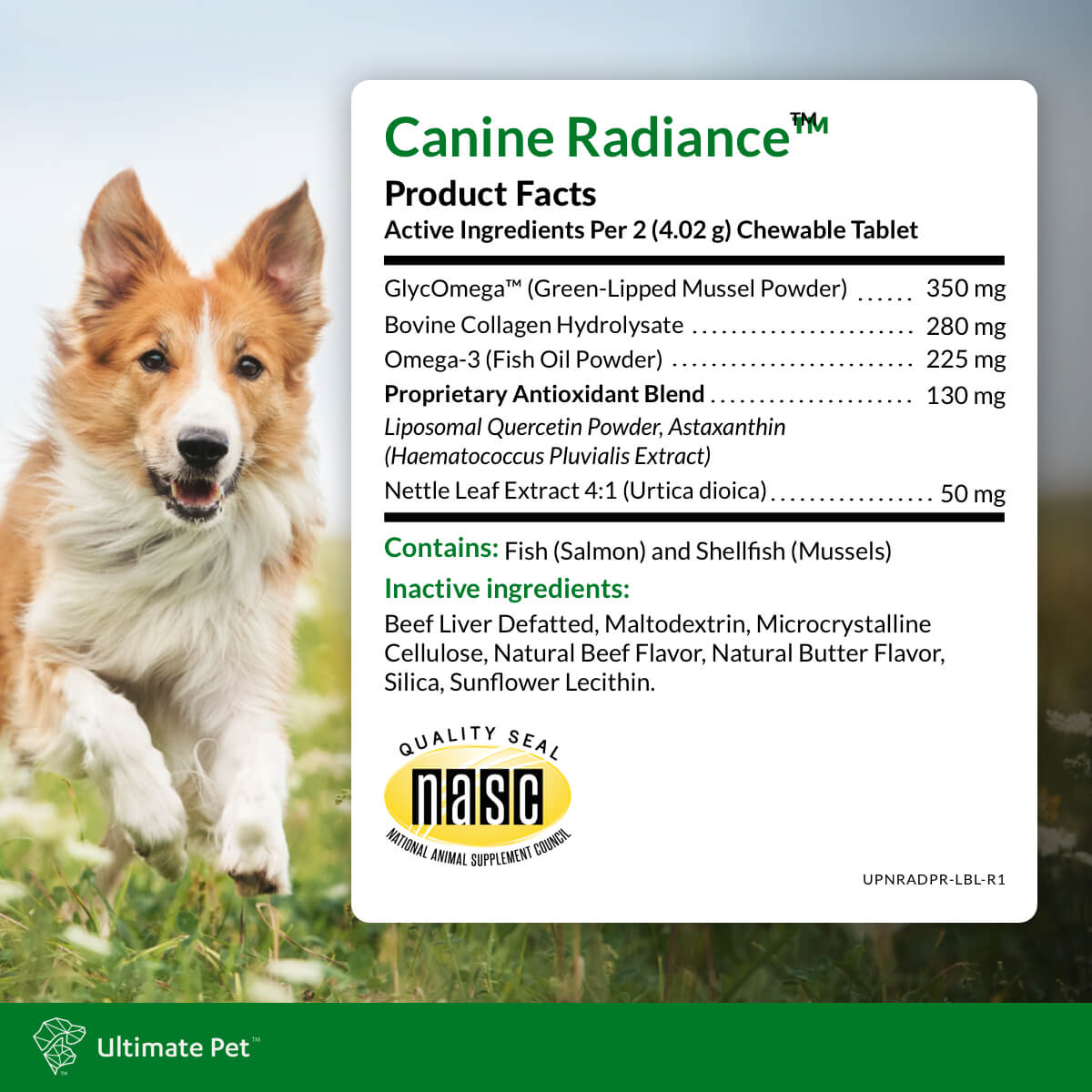
Ultimate Pet Nutrition describes Canine Radiance as a chewable tablet for seasonal skin and allergy support. The current product page lists green-lipped mussel powder, bovine collagen hydrolysate, omega-3 fish oil powder, a quercetin and astaxanthin antioxidant blend, and nettle leaf extract among its active ingredients. It is a supplement, not a substitute for rinsing off irritants, maintaining parasite prevention, treating wounds or seeking veterinary care.

If you are considering it, decide at home rather than introducing it on the first night of a holiday. A familiar routine is easier to monitor, and you avoid confusing a new product with a new environment, food change or stressful journey. Take a photo of the label, pack the original container, and write the normal serving time on your dog-care sheet. Never tip unlabelled tablets into a generic travel tin.
The merchant’s directions are based on body weight, but that does not make the product appropriate for every dog. The label states that it contains fish and shellfish ingredients and includes cautions for certain animals and medications. The company advises an examination by a veterinarian before use and says it should not be used with blood thinners. Those details matter more than the convenience of a chewable format.
Read the label like a traveller
| Question | Why it matters away from home |
|---|---|
| Has my veterinarian reviewed the ingredients? | Existing conditions, prescriptions and known food sensitivities travel with the dog. |
| Has my dog taken it successfully at home? | A holiday is a poor setting for testing a completely new daily product. |
| Is the original label packed? | Directions, cautions and contact details remain available if another carer takes over. |
| Can it stay cool and dry? | A closed car, damp beach bag or sunny windowsill is not sensible storage. |
| Who is responsible for each serving? | One named adult prevents missed or doubled servings in a busy group. |
Keep a two-line observation log
A useful log does not need an app. Write the outing on the first line: "Two hours, dry grass, warm and windy." On the second, write the evening check: "Paws clear; mild collar dampness; no repeated licking." The next day, you can see whether the situation is changing instead of relying on a vague memory of yesterday.
Keep the record neutral. "Scratched twice after dinner" is more helpful than "allergies worse." If another person is caring for the dog, the same short format lets them report consistently. It also prevents every normal shake or scratch from becoming a crisis while still making persistent changes visible.
Urgent swelling, breathing difficulty, collapse, widespread hives, a rapidly worsening reaction or severe distress needs prompt veterinary attention. Contact a veterinarian for persistent redness, broken skin, discharge, pain, repeated head shaking or licking that does not settle. A travel checklist cannot diagnose or treat these signs.
A better last step before tomorrow’s walk
Once the dog is dry and settled, clean the brush, rinse the dedicated towel if necessary and inspect the harness. Note where you walked and choose tomorrow’s route with that information in mind. If one verge was full of seeds, cross the road next time. If the midday pavement felt too warm, move the outing earlier. Good holiday care is often a series of small adjustments rather than one dramatic fix.
Canine Radiance may appeal to owners who want to discuss daily seasonal skin support with their veterinarian and prefer a chewable format. The strongest reason to consider it is not a promise of instant results; it is whether the current ingredients, directions and cautions make sense for a particular dog within an already sensible routine.
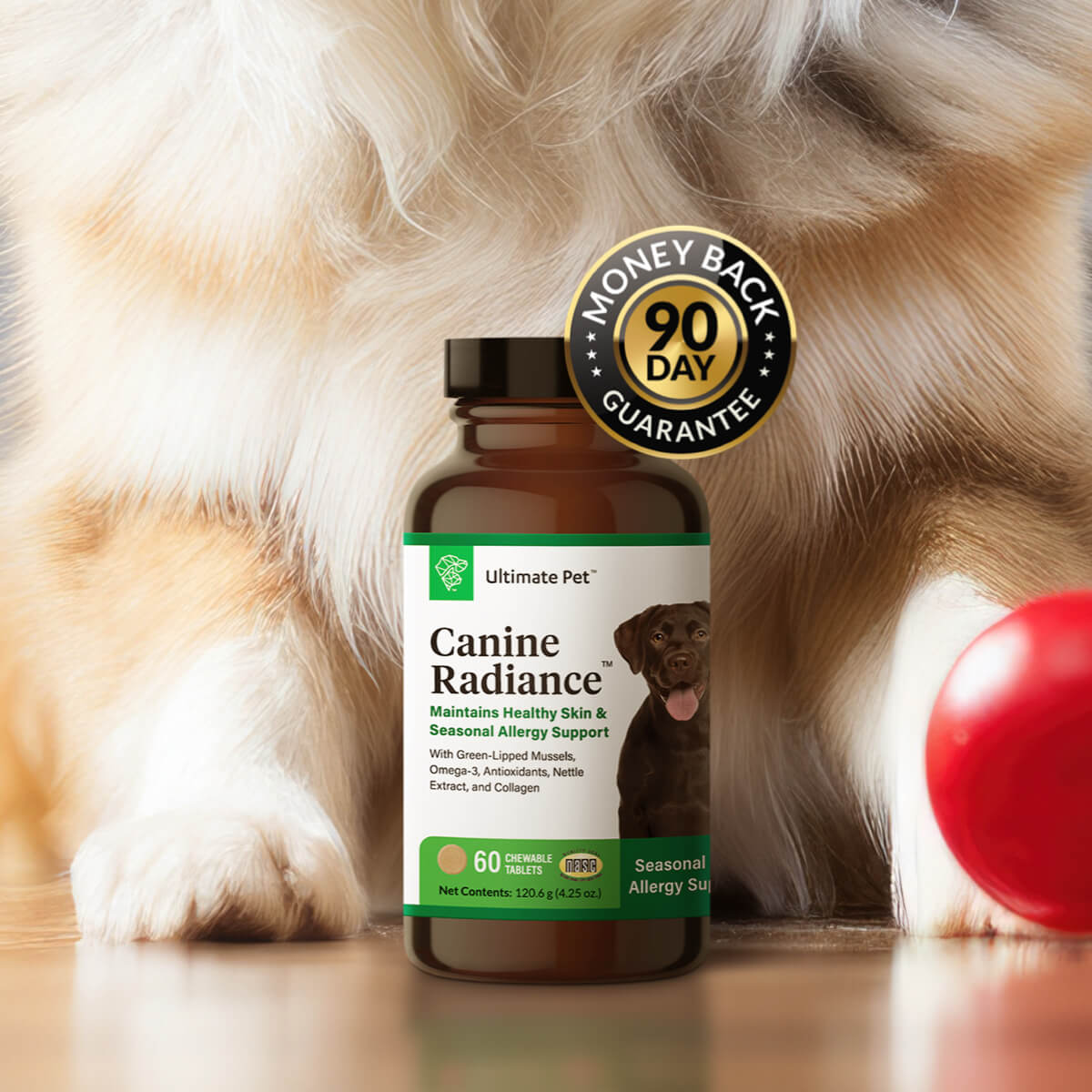
Review Canine Radiance at Ultimate Pet Nutrition
See the current formula, complete label, weight-based directions and merchant terms. Discuss any new supplement with your veterinarian before adding it to your dog’s routine.
Editorial note: Product information was checked against the merchant’s current page. Formulas, prices and policies may change. Individual pets vary, and this article is not veterinary advice.
Related Post

Eco-Friendly Boutique Hotels Costa Rica: What Actually Justifies the Price in 2026
Costa Rica’s eco-boutique hotel market has matured. What was once a niche of rustic ecolodges [...]
How to Keep Your Cat’s Nails Healthy in 5 Vet-Approved Steps
As a responsible cat owner, you’re well aware of the importance of caring for your [...]