Top Tips for Cat Dental Care
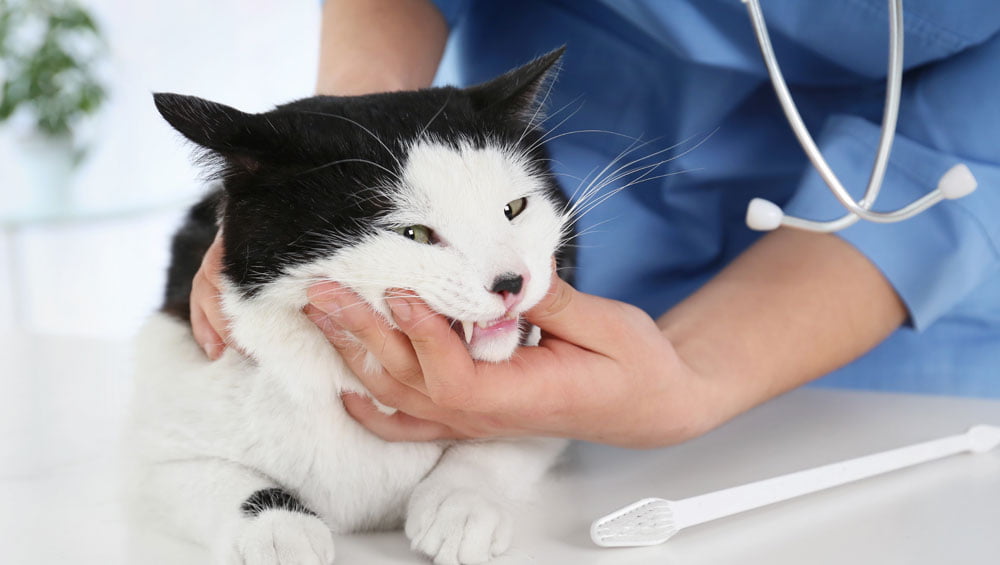
Your cat’s breath shouldn’t smell like old fish and regret. But for most cats over age three, periodontal disease is already present — often silently, with no obvious symptoms until a vet spots inflamed gums or crumbling molars during a routine checkup.
The pet dental product market runs loud with promises. Treats that “clean teeth.” Water additives that “reduce plaque.” Toothpastes in poultry flavors your cat supposedly loves. Some of these actually deliver results. Many are almost entirely packaging.
What follows is a clear-eyed breakdown of what the evidence supports, which products are worth buying, and what common mistakes are silently costing cats their teeth.
Why Feline Dental Disease Is Far More Serious Than Bad Breath
By age three, roughly 70% of cats show signs of periodontal disease. That number has held for decades — because most cats still receive no dental care at home, and because the biology is aggressive.
Plaque forms on tooth surfaces within hours of eating. It is a sticky bacterial film. Left undisturbed, it mineralizes into tartar within 48 to 72 hours. Tartar is the yellowish-brown crust visible on the back molars of cats that have not had dental care. Once tartar forms, a toothbrush will not remove it. Only an ultrasonic scaler — used under anesthesia by a vet — can break it down.
As bacteria colonize below the gumline, the immune response triggers inflammation. Gums recede. The periodontal ligaments and the alveolar bone supporting the tooth roots begin to break down. Eventually, teeth become loose, painful, and require extraction. A single feline dental extraction at a veterinary clinic runs between $500 and $1,500, depending on how many teeth are affected and the extent of bone loss. Multiple extractions can push costs past $2,000.
The damage does not stop at the mouth.
The Connection to Kidney and Heart Disease
Chronic oral bacteria can enter the bloodstream through inflamed gum tissue. Studies link severe periodontal disease in cats to kidney disease and structural heart valve changes. The causation debate continues — correlation versus direct cause is genuinely complex in animal research — but the link is strong enough that many veterinary cardiologists now include dental status in cardiac evaluations.
The American Veterinary Dental College has published formal position statements on the systemic risks. This is not marketing copy invented by dental chew companies. The risk is documented and taken seriously in veterinary medicine.
Tooth Resorption: The Hidden Problem Brushing Cannot Prevent
Separate from periodontal disease, somewhere between 30% and 40% of cats develop tooth resorption — a condition where the tooth structure dissolves from the inside, progressing toward the root. It is painful. It is progressive. No over-the-counter product prevents it. The underlying cause is not fully understood even in current veterinary research.
Resorptive lesions appear as pink or red erosions at the gumline. They are frequently missed without dental X-rays, even by experienced veterinarians during visual exams. This is one of the clearest arguments for annual professional dental exams with radiographs — not because anything is obviously wrong, but because you often cannot tell from the outside.
How to Actually Brush Your Cat’s Teeth Without Getting Shredded
Brushing is the gold standard. The Veterinary Oral Health Council (VOHC) rates daily toothbrushing as the single most effective at-home dental intervention for cats. Nothing else comes close in independent testing.
The barrier is behavioral, not technical. Cats do not cooperate by default, and if you rush the introduction, you teach your cat to fight the process — and that lesson sticks. A proper desensitization approach takes two to four weeks. Every day of it is worth spending.
What you need:
- A cat-specific soft toothbrush or finger brush. The Virbac CET Finger Brush is widely used and gives you more tactile control than a standard handle brush — useful when you are just starting out.
- Enzymatic toothpaste designed for cats. Virbac CET Enzymatic Toothpaste (~$10, available in poultry and malt-vanilla flavors) is the most consistently recommended product by veterinary dentists. The enzymatic action works on plaque even when brushing technique is imperfect.
Do not use human toothpaste. Xylitol — present in many standard and so-called natural human toothpastes — causes acute liver failure in cats. Fluoride at high concentrations is also a concern for animals that swallow what is on the brush. There is no shortcut here.
The Introduction Phase: Week 1 to 2
- Put a small amount of enzymatic toothpaste on your fingertip. Let your cat lick it off. No brush, no mouth-opening, no pressure. Repeat daily.
- Once your cat expects the toothpaste taste, begin rubbing your fingertip gently along the outer gumline — both sides, 10 to 15 seconds total. Stop before your cat gets irritated.
- Follow every session with something your cat genuinely enjoys: a treat, a play session, or their meal. Consistency of positive association is what makes the behavior durable.
Moving to the Brush: Week 3 to 4
- Load the toothbrush with toothpaste and offer it for your cat to lick without moving it near the gums. Getting them comfortable with the object removes one variable at a time.
- Gently lift the lip and touch the brush to the front teeth for a few seconds. Stop immediately. Treat. Repeat over multiple sessions before advancing further.
- Work toward the back teeth gradually. The carnassials — the large upper fourth premolars — are the highest priority. These teeth face the cheek and accumulate tartar the fastest. Brushing these consistently delivers meaningful results even if you cannot reach every tooth.
Ongoing Brushing Technique
- Angle the brush at roughly 45 degrees to the gumline.
- Use small circular or elliptical strokes. Focus on the outer, cheek-facing surfaces — a cat’s tongue handles the inner surfaces better than you can reach anyway.
- Thirty to sixty seconds is sufficient if done every single day. Daily light brushing beats weekly thorough brushing. Plaque mineralizes within 48 hours, so frequency matters more than duration.
You do not need to pry the mouth open. Most brushing can be done by gently lifting the lips from the outside. Less force means less resistance and a calmer cat.
Dental Treats, Water Additives, and Wipes: A Straight Comparison
Most adult cats will not accept daily brushing — especially if they were never introduced to it young. The alternatives below are not equivalent replacements for brushing, but several are genuinely useful as supplements or fallback options.
| Product Type | Specific Products | Price (approx.) | VOHC Accepted? | Effectiveness vs. Brushing |
|---|---|---|---|---|
| Enzymatic toothpaste + brushing | Virbac CET Enzymatic Toothpaste, Vet’s Best Enzymatic Kit | $8–15 | Yes (via brushing method) | Highest — gold standard |
| Dental treats | Greenies Feline Dental Treats, Hill’s Science Diet Oral Care Treats | $6–15 per bag | Greenies: Yes | Moderate (~20–30% tartar reduction) |
| Water additives | Oxyfresh Pet Dental Water Additive, Tropiclean Fresh Breath | $10–20 | Select formulas: Yes | Low to moderate (targets plaque, not tartar) |
| Dental wipes | Petkin Plaque Tooth Wipes, Nylabone Advanced Oral Care Wipes | $8–12 | Most: No | Low |
| Prescription dental diet | Purina Pro Plan Veterinary DH, Hill’s Prescription Diet t/d | $30–60 per bag | Yes | Moderate to high (mechanical abrasion) |
Greenies Feline Dental Treats (~$8–10 per 2.1 oz bag) are VOHC-accepted, which means independent testing confirmed actual plaque or tartar reduction — not just label claims. The mechanical action of chewing the textured treat does the work. Cats that gulp treats without real chewing get significantly less benefit. Watch how your cat eats them before making this your primary strategy.
Oxyfresh Pet Dental Water Additive (~$16 for 16 oz) is odorless and tasteless, which matters because many cats will refuse their water bowl entirely if an additive changes the flavor even slightly. It is one of the better-supported water additives in terms of independent data. Tropiclean Fresh Breath (~$10) uses a mint-based formula at a lower price point — some cats accept it without issue, others boycott the bowl immediately. Test carefully before assuming it is working.
The prescription diets are an underused option that deserves more attention. Hill’s Prescription Diet t/d and Purina Pro Plan Veterinary DH Dental Health are engineered so the kibble structure requires real chewing force, producing mechanical abrasion across the tooth surface as the cat bites through each piece. Both carry VOHC acceptance. For cats that eat dry food anyway and will not tolerate brushing, switching to a VOHC-accepted dental diet is one of the most practical alternatives on the table.
The Mistakes That Accelerate Dental Disease
These four errors show up repeatedly in cats presenting with advanced dental disease at veterinary clinics.
- Human toothpaste. Xylitol is in dozens of standard brands, including many marketed as natural or whitening formulas. It causes acute liver failure in cats. Non-negotiable: use only cat-formulated toothpaste.
- Forcing brushing before desensitization is complete. A cat restrained and brushed against its will on day one learns to fight every future session. The two-week introduction protocol exists because it works. Skipping it does not save time — it creates months of setbacks.
- Trusting the word dental on packaging. In the United States, dental carries no regulatory definition for pet products. A treat can be labeled dental with zero independent evidence behind it. Only VOHC certification means external testing actually happened. If the product is not on the VOHC accepted-products list, the evidence is whatever the manufacturer printed on the bag.
- Treating home care as a substitute for professional cleaning. Home care slows progression. It does not remove existing tartar, cannot treat subgingival bacteria, and cannot detect resorptive lesions. Annual professional dental evaluation remains necessary even in well-cared-for cats.
When Home Care Is Not Enough: Making the Case for Professional Cleaning
If your cat has visible tartar, red or swollen gumlines, or persistent bad breath despite consistent home care — no treat or water additive will fix it. At that point, active disease is present. The only appropriate next step is a professional veterinary dental cleaning, and delaying it makes the eventual treatment more invasive and more expensive.
Professional feline dental cleanings require general anesthesia. Anesthesia-free dental cleanings — offered at some grooming facilities and mobile pet services — remove visible surface tartar but cannot address subgingival disease, which is where the active destruction of supporting bone and tissue happens. The American Veterinary Dental College explicitly opposes non-anesthetic dental procedures because they produce a false appearance of dental health while leaving disease untreated below the gumline.
What a Full Veterinary Dental Procedure Actually Involves
- Pre-anesthetic bloodwork to evaluate kidney and liver function before sedation
- Full-mouth dental radiographs — essential for assessing bone levels and detecting resorptive lesions invisible to visual exam
- Ultrasonic scaling above and below the gumline
- Subgingival hand scaling where needed
- Polishing to reduce future plaque adhesion
- Extraction of non-viable teeth, if identified
Cost without complications: $300–800. Add extractions, and $800–2,000+ is realistic depending on how many teeth require removal and the region. Consistent professional cleanings before disease advances are significantly cheaper than waiting until extractions become unavoidable.
Breeds That Need More Frequent Professional Attention
Flat-faced breeds — Persians, Exotic Shorthairs, and British Shorthairs — have teeth crowded into structurally compressed jaws. Tartar accumulates faster and periodontal breakdown happens earlier than in cats with normal facial anatomy. Owners of these breeds should plan for professional cleanings every 12 to 18 months, not the 2–3 year window sometimes cited for cats with average dental structure.
The VOHC publishes a current accepted-products list. Cross-referencing any dental product against that list before buying is the fastest way to cut through marketing language and identify what has genuinely been independently tested.
This article is for educational purposes only. For diagnosis or treatment of dental disease in your specific cat, consult a licensed veterinarian.
Related Post
Cat Reproduction & Mating: Vet-Approved Facts & Explanation
Cat breeders and veterinarians aren’t the only ones who need to know about the feline [...]
Keep Your Dog or Cat at a Healthy Weight
Skip the specialty food aisle for now. The single most important thing you can do [...]