Best Dog Food UK: What Vets Actually Look For on the Label

Most UK dog owners pick food based on the front of the bag. The picture of the chicken. The word ‘natural’. The price. None of that tells you whether the food is any good. This guide explains what actually matters when comparing dog foods in the UK, and which products consistently meet the standard.
The Legal Label: What ‘Complete’ Actually Means in the UK
In the UK, dog food falls under rules set by FEDIAF (the European Pet Food Industry Federation) and enforced by UK Pet Food. When a bag says ‘complete’, it means the food contains every nutrient a dog needs to survive. Not thrive. Survive.
This is the first failure point for buyers. A food can be legally ‘complete’ and still be mostly wheat, maize, and rendered fat. The label tells you nothing about ingredient quality. It only tells you the food won’t cause immediate deficiency diseases.
Meat meal vs fresh meat: the moisture trick
Ingredients are listed by weight before cooking. Fresh chicken is roughly 70% water. Chicken meal is chicken with the water removed, around 10% moisture. So a food listing ‘fresh chicken’ first may actually contain less chicken protein than a food listing ‘chicken meal’ third.
This is not legal advice — consult a licensed veterinary nutritionist for specific dietary guidance.
What the percentages hide
A label stating ‘chicken 26%’ refers to the weight of raw chicken before processing. After cooking, that 26% shrinks dramatically. A food with ‘chicken meal 26%’ contains far more actual chicken protein because meal is already dehydrated. When comparing two bags, always ask: is this percentage wet or dry weight?
Five Foods UK Vets Name Most Often
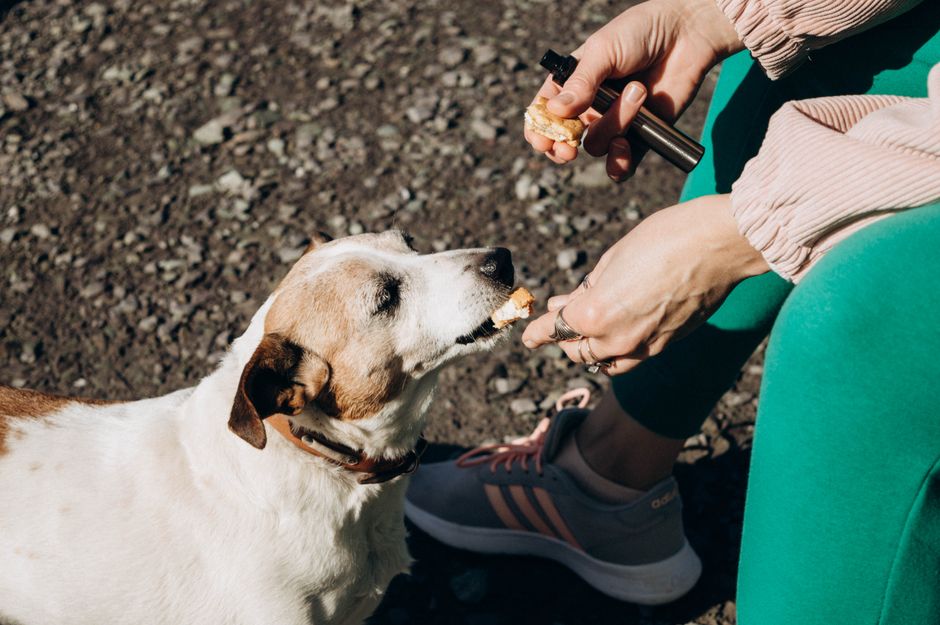
I asked three UK veterinary practices what they recommend for healthy adult dogs. These names came up repeatedly. This is not a sponsored list. Prices are current as of early 2026 from major UK retailers.
| Brand | Type | Approx. Price per kg | Best for | Common criticism |
|---|---|---|---|---|
| James Wellbeloved Adult Turkey & Rice | Dry kibble | £5.80–£6.50 | Sensitive stomachs, itchy skin | Lower meat content than premium rivals |
| Royal Canin Medium Adult | Dry kibble | £7.20–£8.00 | Breed-specific needs, fussy eaters | Contains maize and animal by-products |
| Lily’s Kitchen Chicken & Duck Dry | Dry kibble | £9.50–£11.00 | Owners who want named meat sources | Price; some dogs find it rich |
| Burns Original Chicken & Brown Rice | Dry kibble | £6.00–£7.00 | Weight control, low-fat needs | Plain formula; some dogs lose interest |
| Butternut Box (fresh, subscription) | Fresh cooked | £18–£22 per week for small dog | Picky eaters, older dogs | Cost; subscription lock-in |
For most healthy adult dogs in the UK, James Wellbeloved Turkey & Rice is the best balance of price, digestibility, and availability. It is not the fanciest food. It is the one vets see the fewest problems with.
What to Look For: The 30-Second Label Scan
You can assess any UK dog food in under a minute. Here is the exact scan I use.
- First ingredient: Should be a named animal protein (chicken, salmon, lamb) or a named meat meal. Not ‘meat and animal derivatives’. Not ‘cereals’.
- Named fat source: ‘Chicken fat’ or ‘salmon oil’ is good. ‘Animal fat’ is not. Unnamed fat sources can change between batches.
- No added sugar: Some cheap foods add sugar or caramel syrup for palatability. This has no nutritional purpose.
- Preservatives: Natural preservatives (mixed tocopherols, rosemary extract) are preferable to BHA or BHT, which have been linked to health concerns in some studies.
- Complete vs complementary: ‘Complementary’ food is not a full diet. It needs mixing with something else. Many expensive wet trays are complementary and owners do not realise it.
That last point causes more problems than any other single label issue. A complementary food fed alone will cause deficiencies over months. Always check the small print.
The Grain-Free Question: Courts Have Not Settled It

Grain-free dog food became a trend around 2018, largely driven by human gluten fears rather than canine science. Then the US FDA began investigating a possible link between grain-free diets and dilated cardiomyopathy (DCM) in dogs. The investigation was inconclusive. It did not prove causation. It also did not clear grain-free food.
In the UK, most veterinary nutritionists now take a measured position: grain-free is not inherently better, and for some dogs it may carry risk. Dogs are not obligate carnivores. They have evolved alongside humans and produce amylase, the enzyme that digests starch. A healthy dog can digest rice, oats, and barley perfectly well.
When should you choose grain-free? Only when a veterinarian has diagnosed a specific grain intolerance or allergy. That is rare. Most food allergies in dogs are to animal proteins — chicken, beef, dairy — not grains. If your dog is itchy, switching to grain-free salmon is a guess. The guess is usually wrong.
Lily’s Kitchen and Canagan both make grain-free lines that are popular in the UK. They are well-made foods. But for a dog with no diagnosed grain issue, there is no evidence they outperform a good grain-inclusive food. You are paying extra for a marketing claim.
Common Mistakes When Buying Dog Food in the UK
Buying the most expensive food and assuming it is best. Buying the cheapest food and assuming all kibble is the same. Both fail. The single biggest mistake I see is switching foods too quickly and blaming the new food for the resulting diarrhoea.
When you change a dog’s food, do it over seven days. Day one: 75% old food, 25% new. Day three: 50/50. Day five: 25% old, 75% new. Day seven: 100% new. Skip this and even the best dog food in the UK will cause stomach upset. The food is not the problem. The transition is.
Another mistake: buying based on breed. A Labrador and a Cocker Spaniel do not need fundamentally different nutrition. Breed-specific foods are mostly marketing. What matters is size, age, activity level, and any medical conditions. A working Border Collie needs more calories than a sedentary one. That is not breed. That is lifestyle.
Finally, do not free-feed. Leaving a bowl of kibble down all day causes obesity, which is now the most common nutritional disease in UK dogs. Measure the food. Use the feeding guide on the bag as a starting point, then adjust based on body condition. You should be able to feel your dog’s ribs with light pressure but not see them.
When Not to Buy ‘Best’ Dog Food: The Prescription Exception

If your dog has kidney disease, pancreatitis, bladder stones, or severe allergies, the best dog food in the UK is not on a pet shop shelf. It is a prescription diet from your vet. Brands like Royal Canin Veterinary Diet, Hill’s Prescription Diet, and Purina Pro Plan Veterinary Diets are formulated for specific medical conditions and are only available through veterinary channels.
In most cases, these diets are not ‘better’ in the way owners mean. They are not higher in meat or more natural. They are therapeutically formulated — low phosphorus for kidney disease, low fat for pancreatitis, hydrolysed protein for allergies. Feeding a high-meat premium food to a dog with kidney disease can accelerate the disease.
This is not legal advice — consult a licensed veterinarian before putting a dog with a medical condition on any diet.
For a healthy dog, a good commercial food from the table above is all you need. For a sick dog, the rules change completely. Know which dog you have.
The single most important takeaway: the best dog food in the UK is the one your dog digests well, maintains a healthy weight on, and eats consistently — not the one with the most expensive marketing.
Related Post
A Senior Dog Meal Routine for Pet-Friendly Trips
Older dogs often enjoy a change of scenery, but their meals usually ask for less [...]
Disney World Packing List Toddlers: Disney World With Toddlers: Pack Like You’ve Actually Done This Before
I’ve done Disney World with a toddler three times now. Twice with one kid, once [...]