Europe Travel Budget Under $50 A Day: Europe Travel Budget: Real Daily Costs and Where the $50/Day Plan Breaks Down

Can you actually still travel Europe for under $50 a day in 2026? You’re reading this because some influencer posted a reel claiming they did Paris, Rome, and Barcelona on $35 a day, and now you’re wondering if that’s real or if they slept in a train station and ate supermarket bread for two weeks.
The honest answer: yes, $50 a day is possible. But not everywhere. And not without tradeoffs most people don’t talk about.
This article is not legal advice, but it is the financial reality check you need before you book a one-way flight to Lisbon with $1,500 in your bank account and a prayer. I’ve broken down the actual numbers, the countries where this budget works, the ones where it doesn’t, and the specific failure points that blow up most budget trips.
The $50/Day Math: What This Budget Actually Buys in 2026
Let’s start with the uncomfortable truth. The $50/day figure you see online usually excludes flights into Europe, travel insurance, and any buffer for emergencies. It’s a ground-costs-only number.
Here’s what a realistic $50 day looks like in a budget-friendly country like Portugal or Poland:
| Expense | Budget Range | What It Gets You |
|---|---|---|
| Hostel dorm bed | $18–$25 | 8–12 bed dorm, central location, free breakfast sometimes |
| Food (self-catered + 1 cheap meal out) | $12–$15 | Supermarket breakfast, bakery lunch, one budget restaurant dinner |
| Local transport | $3–$5 | Metro tickets, trams, or walking |
| Attractions/misc | $5–$8 | One museum, walking tour tip, or cheap activity |
| Buffer | $2–$5 | Laundry, SIM data top-up, coffee |
That’s the math. It works. Barely.
But notice what’s missing: intercity transport. That’s the budget killer. A FlixBus from Krakow to Prague might cost $15–$25. A Ryanair flight from Porto to Barcelona with a checked bag can hit $60–$90. Your daily budget needs to absorb these costs, which means you need days well under $50 to compensate for travel days well over $50.
The real rule: you need a $35–$40 average daily spend if you plan to move between cities every 3–4 days. If you’re spending $50 every single day and then adding transport on top, your actual daily average is $60–$70.
Country-by-Country Reality Check: Where $50 Works and Where It’s a Fantasy

This is the section that saves you from a bad decision. Not all of Europe is the same price. Not even close.
Where $50/day is comfortable
Poland, Romania, Bulgaria, Albania, North Macedonia, Bosnia and Herzegovina, Serbia. In these countries, a hostel dorm bed runs $10–$18. A full meal at a local restaurant costs $5–$8. You can actually afford a private room some nights and still stay under budget.
Where $50/day is tight but doable
Portugal (outside peak season), Spain (Andalusia, not Barcelona), Czech Republic (outside Prague’s center), Hungary, Slovenia, Croatia (inland, not Dubrovnik), Greece (mainland, not Santorini). You’re cooking most meals, staying in dorms, and being selective about paid attractions.
Where $50/day is not happening
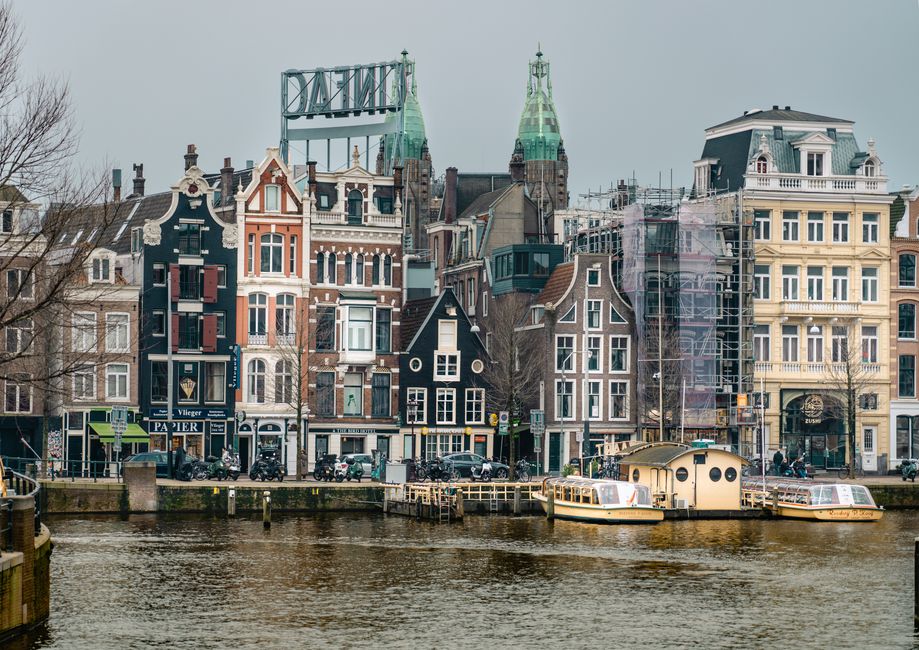
Switzerland, Norway, Iceland, Denmark, Netherlands, Ireland, and central London or Paris. In Zurich, a dorm bed alone is $50–$70. In Reykjavik, a basic hostel bunk runs $60–$80 in summer. If you try to force a $50 budget here, you’ll end up skipping meals or sleeping in airports. That’s not a travel strategy; that’s survival mode.
My honest recommendation: if your total budget is $50/day, build your itinerary around Eastern Europe and the Balkans, then add one or two Western European cities only if you have buffer days where you spend less to offset them.
What Actually Blows Up a Budget Trip (And How to Prevent It)
Most people don’t fail because the daily math is wrong. They fail because of predictable, avoidable mistakes. Here are the four big ones.
1. Booking accommodation day-by-day. Hostel prices in popular cities spike 30–50% when booked last-minute. Booking 2–3 weeks ahead locks in the lower rate. Hostelworld and Booking.com both show this pattern clearly. The traveler who books day-of pays the premium every single time.
2. Ignoring the Schengen clock. You can stay 90 days in the Schengen Area within any 180-day period. If you overstay, you risk fines, deportation, and a future entry ban. This is not a budgeting issue, but it becomes one when you have to book an emergency flight out. Track your days. This is not legal advice — check current Schengen rules with an official source before you travel.
3. Paying foreign transaction fees on every card swipe. A 3% fee on every purchase adds up to $30–$50 over a month. Get a Wise or Revolut account before you leave. Both offer multi-currency accounts with near-zero FX fees. This is the single highest-ROI financial move for a budget traveler.
4. Buying intercity transport at the station. FlixBus, RegioJet, and Ryanair all price dynamically. The Krakow-to-Prague bus might be $12 booked three weeks out and $35 booked the day before. Book transport at the same time you book accommodation.
Accommodation Hacks That Actually Work in 2026

Hostels are the default answer, but they’re not the only answer. And in some cities, they’re not even the cheapest answer anymore.
- Workaway and Worldpackers: Work 4–5 hours a day in exchange for a bed and meals. Zero daily accommodation cost. The tradeoff: you’re working, not sightseeing. Best for slow travelers staying 2+ weeks in one place.
- Overnight buses and trains: A FlixBus from Warsaw to Berlin costs $20–$30 and takes 6–7 hours overnight. You save a hostel night and wake up in a new city. Not great sleep, but strategically useful once a week.
- Monastery and convent stays: Italy and Spain have religious guesthouses charging $25–$40 for a private room. Quieter than hostels, often with curfews. Book directly through monastery websites, not aggregators.
- University dorms in summer: From June to August, many European universities rent empty dorm rooms to travelers for $20–$35 a night. Check university accommodation portals directly.
My pick for most budget travelers: a mix. Hostels for social energy, overnight transport for long distances, and one Workaway stint if your trip exceeds three weeks.
The $50/Day Itinerary That Actually Works
If I had to design a 14-day Europe trip that genuinely stays under $50 a day including intercity transport, here’s what it looks like:
| Days | City | Transport In | Est. Daily Ground Cost |
|---|---|---|---|
| 1–3 | Krakow, Poland | Fly into KRK | $38–$42 |
| 4–6 | Budapest, Hungary | FlixBus overnight ($22) | $40–$45 |
| 7–9 | Belgrade, Serbia | FlixBus ($18) | $32–$38 |
| 10–12 | Sarajevo, Bosnia | Bus ($20) | $30–$35 |
| 13–14 | Mostar, Bosnia | Train ($7) | $28–$32 |
This route works because it’s geographically logical, avoids Western European prices entirely, and keeps transport costs under $70 total. You’re not zigzagging across the continent burning money on flights.
The tradeoff: you’re not seeing Paris, Amsterdam, or Rome. That’s the honest cost of a $50/day trip. You can have Western Europe or you can have a $50 budget. You generally can’t have both.
When You Should NOT Force a $50/Day Trip
There’s a version of this where the budget becomes the entire point of the trip, and that’s a mistake.
If you have 7 days total and you’ve always dreamed of seeing the Eiffel Tower, the Colosseum, and Sagrada Familia, do not force a $50/day budget. You’ll spend your entire trip stressed about money, skipping the very things you came to see, and eating supermarket sandwiches while sitting next to restaurants you can’t afford.
In that scenario, the better move is to shorten the trip and raise the daily budget. A 7-day trip at $90/day gives you $630 total. A 10-day trip at $50/day gives you $500 total. The shorter, slightly more expensive trip is often the better experience for first-time visitors to Western Europe.
The $50/day strategy is best for long-term travelers, slow travelers, and people who genuinely enjoy the challenge of budget travel. It’s not a universal rule. It’s a tool for a specific kind of trip.
So back to the question you started with: can you travel Europe for under $50 a day in 2026? Yes — if you choose your countries carefully, book ahead, use overnight transport strategically, and accept that this budget buys you Eastern Europe, not the postcard version of Western Europe. The math works. But only if you’re honest about what the math actually says.
Related Post

Rabbitgoo Dog Harness Review 2026: Real-World Testing for Road Trips and Hiking
We were three hours into a cross-country drive, somewhere on a dusty stretch of I-80, [...]
Travel Dog Training Tips for Stress-Free Road Trips and Flights 2026
A common misconception among pet owners is that a dog who behaves perfectly in their [...]