A Hotel-Friendly Dental Routine for Dogs
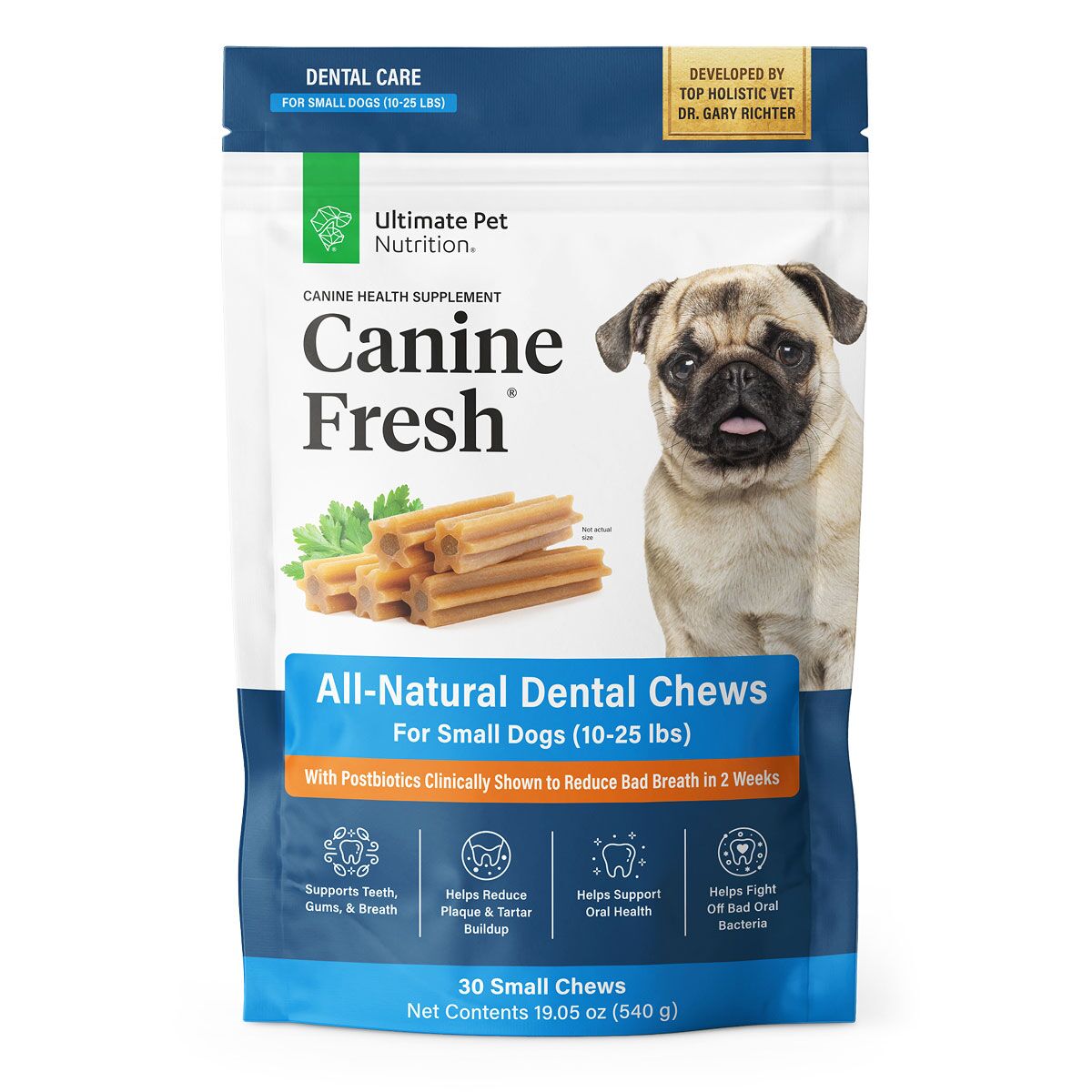
The toothbrush is usually the first part of a dog’s routine to disappear inside a suitcase. A better holiday plan is small enough to keep beside the lead, clear enough for another carer to follow and tidy enough for a hotel room.
Travel alters the cues that make home care automatic. Breakfast may happen early, dinner may be in a pub garden, and the dog’s bowl can move from kitchen to bedroom to car boot in one day. Oral care is easy to forget because nothing appears urgent. The solution is not to pack a miniature bathroom cabinet; it is to attach one repeatable action to a moment that already happens every day.
Choose one anchor, not a perfect schedule
Pick a calm event that survives most itinerary changes. For many dogs, that is after the final evening toilet walk, when the water bowl has been refreshed and the room has settled. Others do better after breakfast, before the day’s excitement begins. The exact hour matters less than consistency and supervision.
If your dog already has a veterinarian-approved brushing routine, keep it where practical. A dental chew can be an additional tool, but it does not replace professional dental examinations or treatment. If brushing is not possible during a short stay, write that honestly into the plan rather than pretending a chew does every job.
Pack for cleanliness as well as convenience
In the dog bag
- The original, resealable product bag
- A copy of the current label if portions are repacked
- A washable mat or towel for the chew area
- Fresh water and the dog’s usual bowl
- Waste bags for crumbs and remnants
On the room note
- The dog’s current weight
- The correct product size
- The chosen daily time
- The name of the adult supervising
- The veterinarian’s contact details
Keep chews in their original packaging when possible. A loose stick in a snack bag loses its size information, ingredients and cautions, and it can be mistaken for an ordinary treat. Store the bag where the dog cannot reach it and away from direct heat or damp. A bedside table is convenient for people, but not necessarily secure from an inquisitive dog.
Use the washable mat to protect hotel carpet and to create a visual cue. The dog learns where to settle, while crumbs stay in one place. This is especially useful in a compact room where luggage, shoes and food bowls already compete for floor space.
What Canine Fresh is designed to do
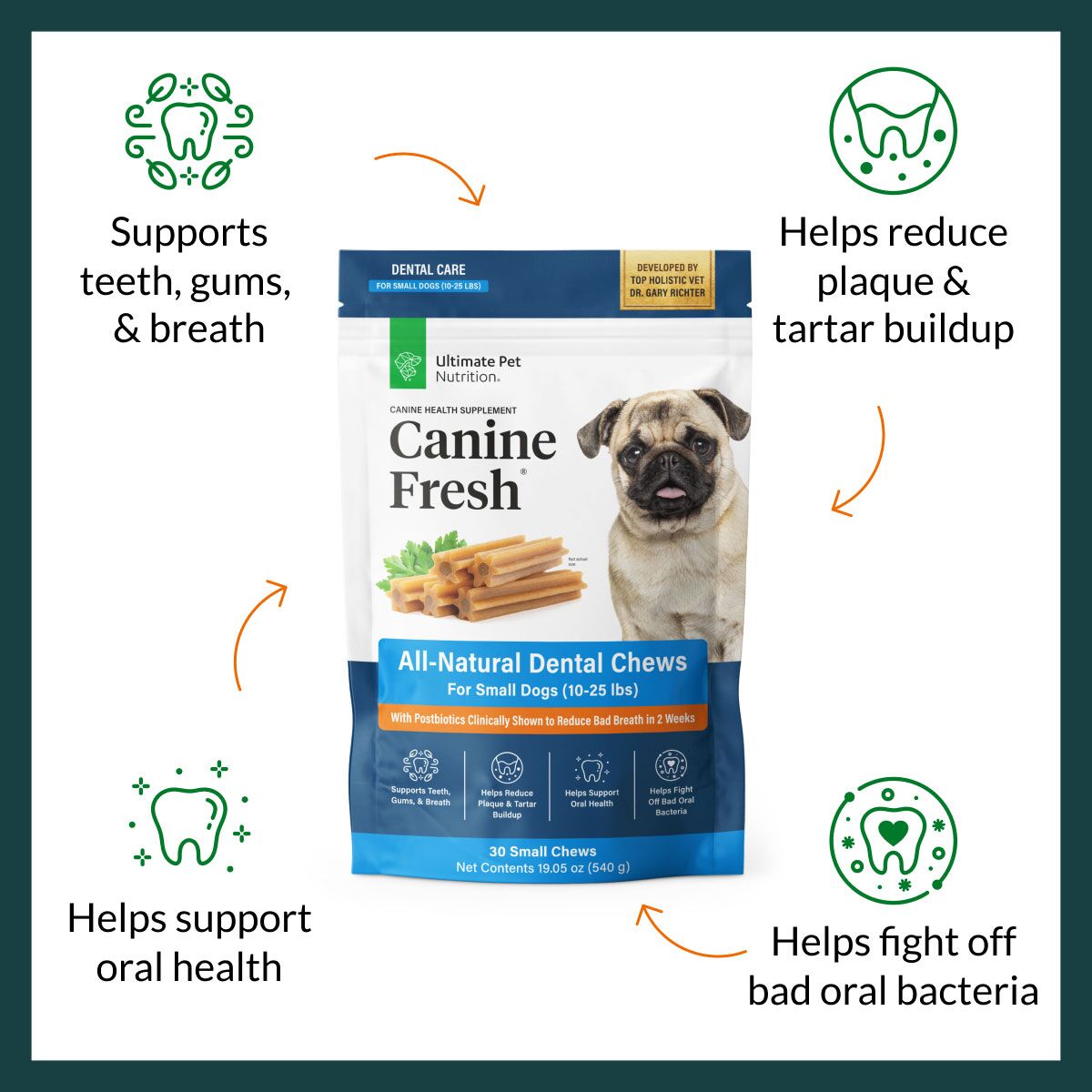
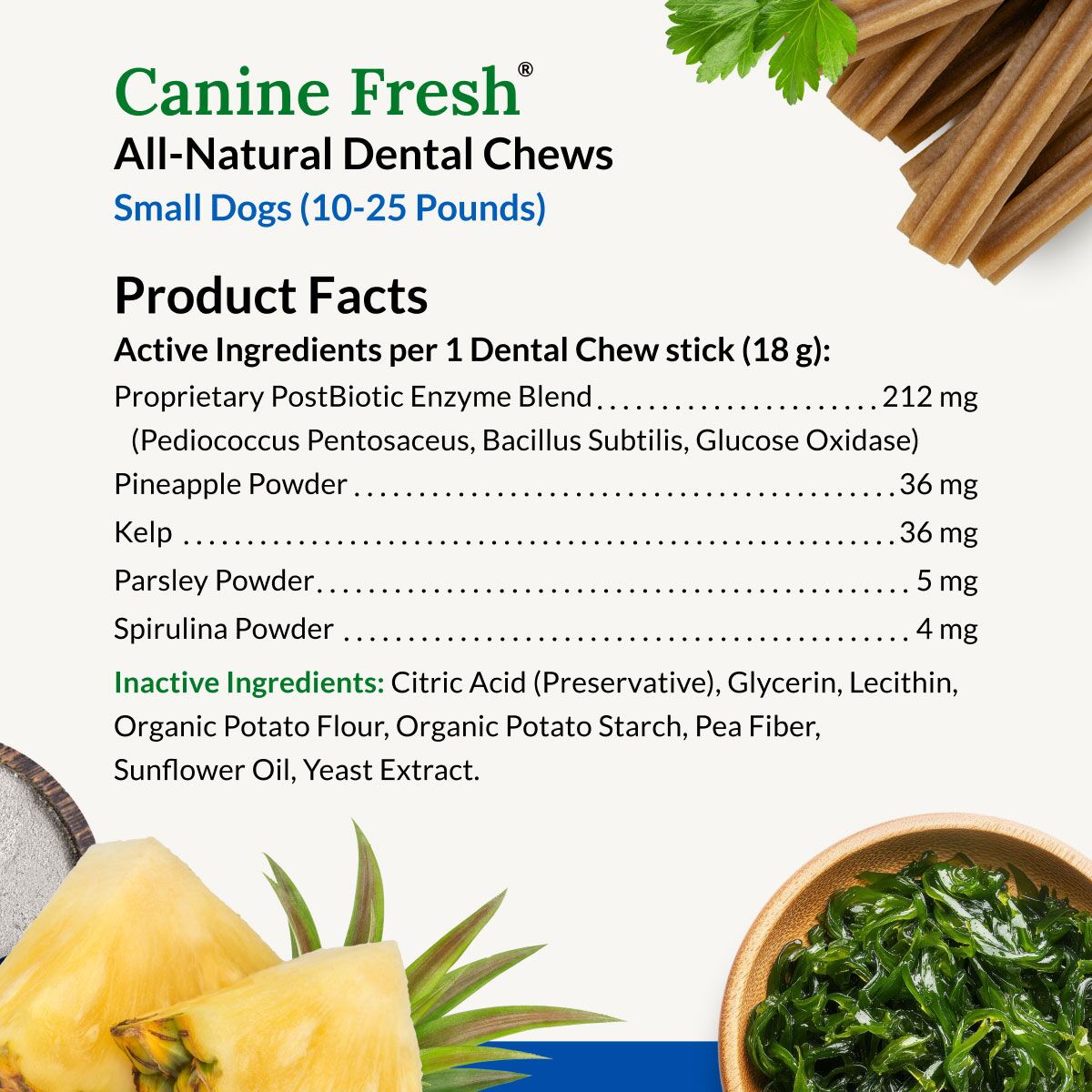
Ultimate Pet Nutrition describes Canine Fresh as an all-natural dental chew intended to support teeth, gums and breath. The current small-dog product page lists a postbiotic enzyme blend, pineapple powder, kelp, parsley powder and spirulina powder. The chew has a ridged star shape, which the merchant says is designed to make contact with areas where plaque and tartar can build up.
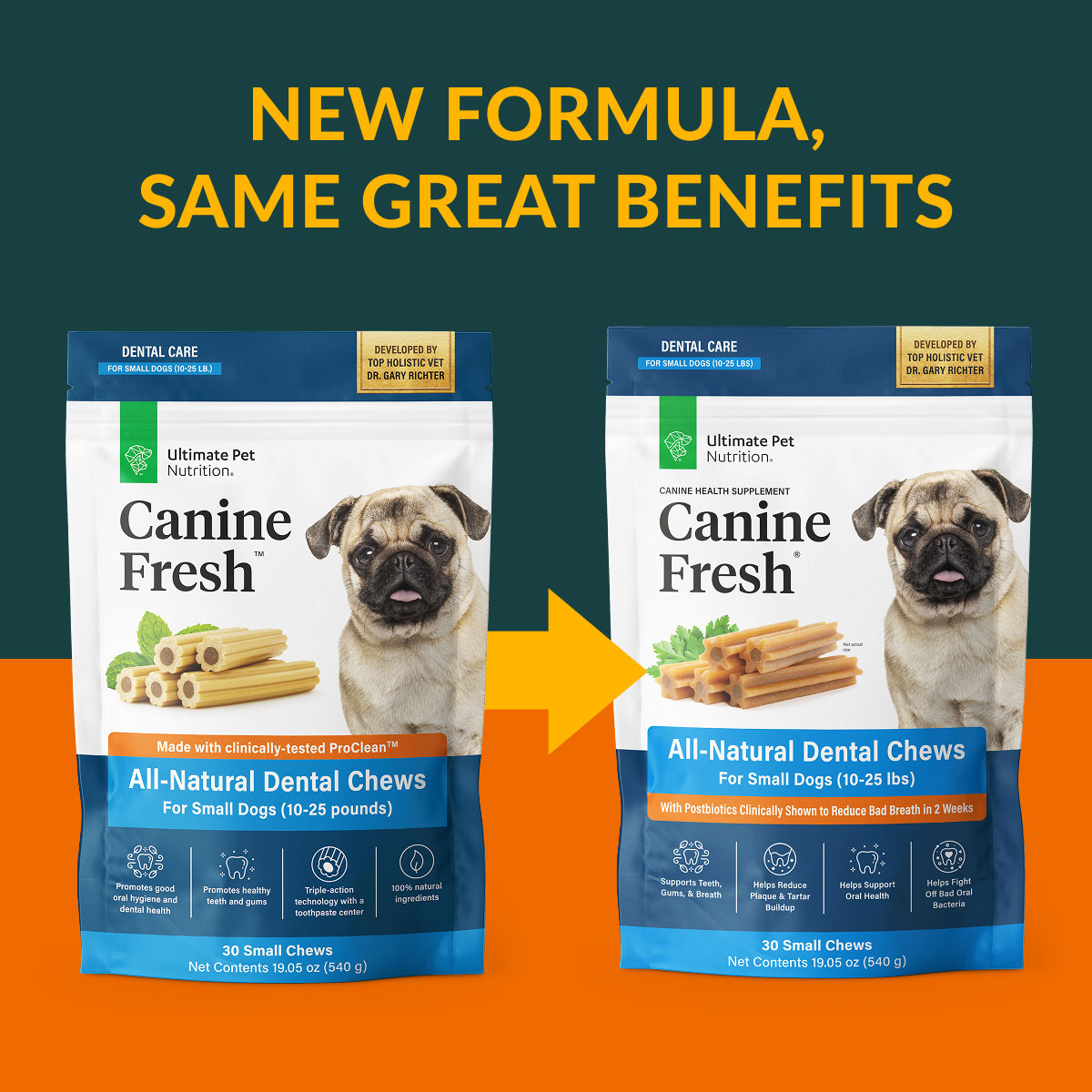
The company offers separate small, medium and large versions. The small product is labelled for dogs weighing 10 to 25 pounds, and the merchant’s directions state one chew per day. That information should be checked on the current bag at the time of use. Do not assume that cutting a larger chew creates the same product as buying the version designed for a smaller dog.
Canine Fresh may be appealing for travel because it is a single daily item and does not require a sink. That convenience still comes with responsibilities: select the right size, introduce it at home, supervise chewing and follow the label. A dog that swallows large pieces, guards high-value items or has difficulty chewing needs an individual plan discussed with a veterinarian.
Use a size check before every trip
| Check | Practical decision |
|---|---|
| Current weight | Match the dog to the correct small, medium or large product; do not rely on an old weight from a previous holiday. |
| Chewing style | Supervise closely and avoid use in rushed or distracting situations, especially if the dog tends to gulp. |
| Dental history | Ask the veterinarian about broken teeth, gum disease, recent procedures or pain before adding a chew. |
| Medical history | Review the ingredient list and product cautions in the context of conditions, prescriptions and known sensitivities. |
| Previous use | Trial the product at home before travel so acceptance and tolerance are not first tested in a hotel. |
Know what the chew cannot tell you
Fresh-smelling breath does not prove that teeth and gums are healthy. Dogs can have dental disease below the gumline that no treat can diagnose. Watch for reluctance to eat, dropping food, chewing on one side, pawing at the mouth, bleeding, facial swelling, excessive drooling or a sudden strong odour. These signs call for veterinary advice rather than another chew.
The current Canine Fresh label also includes cautions. The merchant advises stopping administration and consulting a veterinarian if the animal’s condition worsens or does not improve, notes that safe use in pregnant or breeding animals has not been proven, and advises caution in animals with hyperthyroid disease. Read the package yourself because formulas and warnings can change.
Maintain a routine your dog already understands, keep the product correctly sized and securely stored, and return to the normal home-care plan after the trip. One chew does not need to carry the whole burden of dental care.
Make handovers impossible to misread
Group holidays create a predictable problem: one person assumes another has handled the dog’s routine. Put a single tick box on the room note and name the responsible adult. Do not leave a bowl of dental chews where family members can offer them as treats. If the box is ticked, the task is done.
For a sitter or relative, keep the instruction short: "One correctly sized chew after the final walk, supervised, then refresh water." Add a line saying when not to give it, based on your veterinarian’s guidance. Clear boundaries are more useful than a long product description.
At checkout, count what remains and return the sealed bag to the dog’s food kit rather than a general suitcase. Clean the mat, check that no pieces are under furniture, and record any changes in appetite, chewing or breath to discuss at home. The routine ends as neatly as it began.

Who this approach suits
This routine is best suited to an adult dog already comfortable with supervised dental chews and an owner who wants one clear travel cue. It is not a universal answer for puppies, dogs with painful mouths, dogs that gulp, or pets whose veterinarian has recommended a different dental plan.
Canine Fresh is worth considering when its current size, ingredients and directions fit the individual dog, not merely because the packaging travels easily. The most useful buying decision begins with the dog’s weight and dental history, then ends with a plan that can be followed just as calmly in a hotel room as in the kitchen at home.
Review the current Canine Fresh details
Check the correct size, full ingredient list, cautions and current ordering information on the merchant site before deciding whether it belongs in your dog’s travel routine.
Editorial note: Product information was checked against the merchant’s current page. Formulas, prices and policies may change. Individual pets vary, and this article is not veterinary advice.
Related Post
GPS And Safety Checks Before Walking Dogs In A New Destination
Dog walks in an unfamiliar town or trail need identification, route planning, and simple safety [...]
How Long Do Sphynx Cats Live? Vet Reviewed Lifespan, Care Tips & FAQ
You can’t help but notice a Sphynx cat. The large ears and almond-shaped eyes command [...]