Rabbitgoo Dog Harness Review 2026: Real-World Testing for Road Trips and Hiking
We were three hours into a cross-country drive, somewhere on a dusty stretch of I-80, when I realized my dog’s old collar just wasn’t going to cut it for the rest of the trip. Every time we hit a rest stop, he would lunge toward the grass, straining against his neck and making that heartbreaking hacking sound. It was the moment I knew I needed to switch to a harness. After browsing through dozens of options at various retailers—many of which you can find through major retail partners on platforms like Awin—I settled on the Rabbitgoo No-Pull Dog Harness. It’s one of those products that seems to be everywhere, often recommended for its price point, but I wanted to see if it actually lived up to the hype during long-distance travel and rugged outdoor use.
Why a Harness Beats a Collar for Dog Travel
When you are traveling with a dog, safety and control become much more complicated than they are during a quick walk around the block. In a car, a collar is a liability. If you have to slam on the brakes, all that force is concentrated on your dog’s throat. A harness, like the Rabbitgoo, distributes that pressure across the chest and shoulders, which is significantly safer. During my travels, I’ve found that a harness also provides a much-needed handle. When you’re navigating a crowded airport or a busy gas station, being able to literally grab your dog by the back to keep them out of harm’s way is a massive advantage.
Furthermore, dogs often get overstimulated in new environments. My dog is usually calm at home, but put him in a new state with new smells, and he becomes a puller. The dual-clip design of the Rabbitgoo is particularly useful here. The back clip is great for casual strolls, but the chest clip—the “no-pull” feature—is essential for keeping him under control when we’re exploring unfamiliar downtown areas or crowded trailheads. It’s not just about comfort; it’s about having the mechanical advantage to lead your dog without a constant tug-of-war. I’ve noticed that using a harness also reduces the dog’s anxiety; they feel more secure when the pressure is distributed rather than choking them. This leads to a more relaxed travel companion, which makes the whole trip better for everyone involved.
Rabbitgoo No-Pull Dog Harness Design and Build Quality

The first thing you notice about the Rabbitgoo is that it doesn’t feel like a “budget” harness. It’s constructed from a heavy-duty nylon oxford material that has a slight sheen to it. In my experience, this fabric is surprisingly resistant to snags. I’ve taken it through thick brush and over rocky terrain, and while it’s picked up some dirt, the fibers haven’t started to fray. The interior is lined with a soft, breathable mesh padding. This is a critical detail for travelers because if you’re driving through humid climates or hiking in the sun, you don’t want your dog overheating or developing chafing under their armpits.
Technical Specifications and Pricing
- Material: 900D Nylon Oxford with padded mesh lining
- Adjustment Points: 4 adjustable straps (2 neck, 2 chest)
- Leash Attachment: 2 metal D-rings (Chest and Back)
- Approximate Price: $20 – $28 depending on size and color
- Safety Features: 3M Reflective stitching, top grab handle
One detail I appreciate is the quality of the buckles. They are made of thick plastic that snaps together with a very distinct, audible click. I’ve used cheaper harnesses where the buckles felt flimsy, as if they might pop open under pressure, but these feel secure. The metal D-rings are also surprisingly beefy. The front ring is zinc alloy, and after months of use, it hasn’t shown any signs of bending or rust, even after a few unplanned dips in salt water during a coastal trip. For a product that costs less than thirty dollars, the material choices are impressively robust. It’s the kind of gear you can find at major pet retailers, and it often goes on sale, making it an excellent value-for-money proposition for those who don’t want to drop $50+ on high-end boutique brands.
Sizing and Fit: Getting the Rabbitgoo Right for Your Breed
Sizing is where most people run into trouble with the Rabbitgoo. It’s not that the harness is poorly designed; it’s that dogs come in so many different shapes. My dog has a deep chest but a relatively thin neck, which can be a nightmare for fit. The Rabbitgoo features four adjustment points—two on the neck and two on the chest. This is better than many entry-level harnesses that only adjust at the chest. However, you have to be diligent with the measuring tape before you buy. I’ve found that if you’re on the edge between sizes, it’s almost always better to size up. The straps have a decent amount of length, but you want to ensure there’s enough padding under the buckles to prevent rubbing.
When fitting the harness, I follow the “two-finger rule.” You should be able to fit two fingers between the strap and your dog’s body. If it’s too loose, the harness will slide around, which causes the very chafing you’re trying to avoid. If it’s too tight, it restricts their shoulder movement. One quirk of the Rabbitgoo is that the neck straps don’t have a buckle; the harness has to slide over the dog’s head. If your dog is head-shy or has very large ears, this might be a point of contention. Once it’s on, though, the adjustment sliders stay in place quite well. I haven’t had to re-tighten them mid-walk, which is a common annoyance with smoother nylon straps found on other brands.
Real-World Performance: Hiking, Walking, and Car Rides
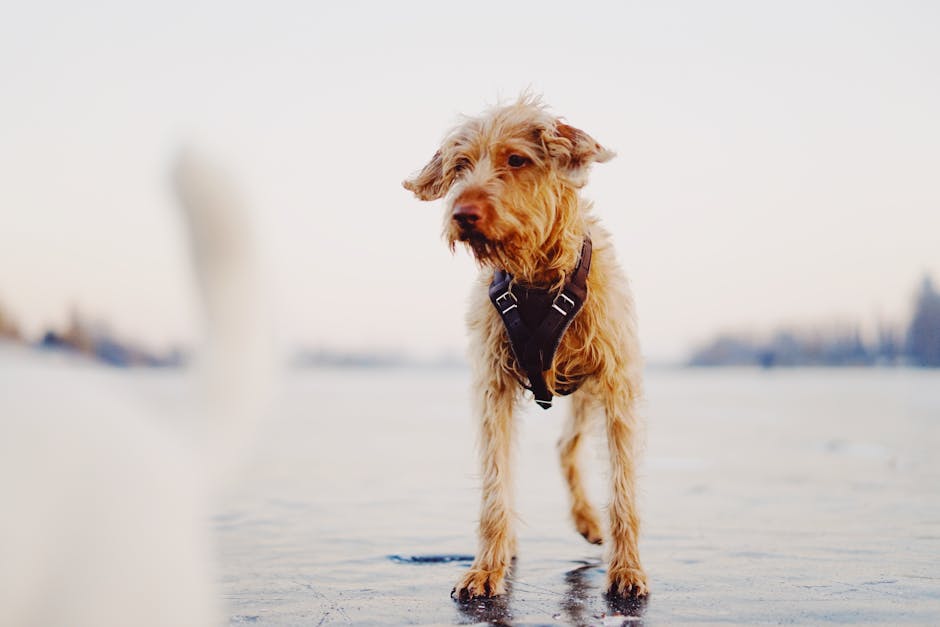
On the trail, the Rabbitgoo performs admirably. The top handle is a feature I use constantly. When we’re hiking over technical terrain or crossing small streams, being able to give my dog a little lift or stabilize him is invaluable. It’s not a full-body lifting harness—don’t try to hoist a 70-pound dog into the air with it—but for a quick assist, it’s perfect. The “no-pull” front clip works by redirecting the dog’s momentum to the side when they pull forward. It’s not a magical fix for a dog that hasn’t been trained, but it certainly makes them easier to manage. I noticed a significant reduction in my dog’s pulling power the first time I clipped him to the front.
In the car, I use a seatbelt tether that clips directly to the back D-ring. Because the harness has a wide chest plate, it distributes the force of any sudden stops. I feel much more comfortable knowing he’s secured this way rather than being loose in the backseat. One thing to note for long car rides: because the harness is padded, it can hold onto body heat. If your car’s AC doesn’t reach the back well, you might want to take the harness off for the actual driving portion and only put it on for stops. However, for shorter trips or cooler weather, my dog seems perfectly happy to nap in it. He hasn’t shown any signs of discomfort even after wearing it for four or five hours straight during a day of sightseeing.
Durability and Longevity: How It Holds Up After a Year
I’ve had my current Rabbitgoo harness for over a year now, and it has seen some serious use. It’s been through mud, snow, rain, and the occasional roll in something I’d rather not identify. The durability is the most surprising aspect. Usually, at this price point, you expect the elastic loops to lose their stretch or the reflective stitching to flake off. While the reflective bits have faded slightly from UV exposure, they are still functional. The mesh padding has held its shape and hasn’t compressed into a flat, useless pancake. It’s also very easy to clean; I usually just soak it in a bucket of warm soapy water and let it air dry. It comes out looking almost new every time.
Pro Tip: If you’re using this harness in salt water or sandy environments, make sure to rinse the metal D-rings and the plastic buckles thoroughly. Sand can get into the buckle mechanism and make it difficult to click shut, and salt can eventually corrode even the best alloys.
The only real sign of wear is some slight pilling on the inner mesh where it rubs against my dog’s coarser fur. The stitching around the handle remains rock solid. I’ve put a fair amount of tension on that handle when helping him up steep embankments, and I haven’t heard a single pop of a thread. For a harness that costs less than a tank of gas, the longevity is impressive. I’ve seen people complain about the front D-ring ripping out, but in most cases, that’s due to a dog that is a chronic, heavy-duty puller being left on a tie-out. This harness is not designed for tie-out use; it’s for active walking and travel. Used as intended, it’s remarkably tough.
Comparing Rabbitgoo to Premium Brands
It is easy to look at the Rabbitgoo and wonder why anyone would pay double for a brand like Ruffwear or Kurgo. The truth is, there are differences, though they might not matter to everyone. Premium brands often use lighter, more technical materials and offer more sophisticated adjustment systems. For example, the Ruffwear Front Range has a more streamlined profile and hidden attachment points. However, for the average traveler or weekend hiker, the Rabbitgoo provides 90% of the functionality at 40% of the cost. If you’re doing multi-day backcountry treks where every ounce matters, go for the premium gear. If you’re going on a road trip and doing some day hikes, the Rabbitgoo is more than enough.
| Feature | Rabbitgoo No-Pull | Ruffwear Front Range | Kurgo Tru-Fit Smart |
|---|---|---|---|
| Price | ~$20 – $28 | ~$50 | ~$35 – $45 |
| Attachment Points | 2 (Front/Back) | 2 (Front/Back) | 2 (Front/Back) |
| Adjustability | 4 Points | 4 Points | 5 Points |
| Crash Tested? | No | No | Yes (Certain Models) |
| Best For | Daily use/Travel | Rugged Hiking | Car Safety |
The Kurgo Tru-Fit is often preferred for car safety because some of their models are actually crash-tested. If your primary concern is the absolute highest level of safety during a high-speed collision, you might want to look into those specialized options. But for a general-purpose harness that handles the transition from the car seat to the hiking trail seamlessly, the Rabbitgoo holds its own. I’ve tried the more expensive brands, and while they are nice, I keep coming back to the Rabbitgoo because it’s easy to use, easy to clean, and I don’t have to worry about it getting ruined in the mud.
Safety Features and Night Visibility for Travelers
One of the most overlooked aspects of travel gear is visibility. When you’re at a dark campsite or walking your dog along a road at night because your hotel doesn’t have a dedicated pet area, being seen is a matter of life and death. The Rabbitgoo harness features 3M Scotchlite reflective piping. It’s integrated into the straps and around the edges of the padded sections. In my tests, it catches headlights from a significant distance. It’s a small detail that provides a lot of peace of mind when you’re in an unfamiliar location and the lighting isn’t great.
Another safety feature is the bright color options. I chose the high-visibility orange for my dog. While it might not be the most fashionable choice for a city walk, it’s fantastic for hiking during hunting season or just keeping an eye on him if he’s off-leash in a safe, permitted area. The color hasn’t faded much despite the sun exposure. If you’re a frequent traveler, I highly recommend choosing one of the brighter colors like the lime green or the orange. It makes your dog much easier to spot against various backgrounds. Between the reflective stitching and the vibrant fabric, the Rabbitgoo does a great job of making sure your dog isn’t invisible when the sun goes down. It’s these thoughtful touches that make it a staple in my travel kit, and why I continue to recommend it to other pet owners looking for a reliable, affordable solution.
Related Post

Best Cat Litter Australia: The Australian Cat Owner’s Guide to Choosing Cat Litter That Works
I travel a lot. Between weekend trips and longer stints away, I need cat care [...]
Pet Food Comparison: How to Compare Pet Food: What the Labels Don’t Tell You
Around 40% of dog and cat owners switched their pet’s food at least twice in [...]