Eco-Friendly Boutique Hotels Costa Rica: What Actually Justifies the Price in 2026
Costa Rica’s eco-boutique hotel market has matured. What was once a niche of rustic ecolodges with cold showers and mosquito nets now includes genuinely refined properties charging $400–$900 per night. This guide sorts the substance from the greenwashing, with specific properties, real 2026 pricing, and the certification details that matter.
What “Eco-Friendly” Actually Means in Costa Rica Right Now
Costa Rica runs a government-backed certification called the CST (Certification for Sustainable Tourism). It scores properties from 0 to 5 based on water use, waste management, community hiring, and energy sourcing. A hotel can call itself “eco” without any certification. That is the first filter.
Properties with CST Level 4 or 5 typically operate off-grid solar, treat graywater on-site, and source at least 60% of food from within 50 kilometers. Anything below Level 3 means the hotel has a recycling bin and a towel-reuse card, which is not the same thing.
Certifications That Carry Weight
- CST Level 4–5: The only Costa Rican certification with real auditing behind it.
- B Corp: Covers labor practices and governance, not just environmental metrics.
- Regenerative Tourism Verified: Newer standard focused on biodiversity net gain, not just harm reduction.
- Rainforest Alliance Verified: Still common, but less rigorous than CST above Level 3.
A skeptic’s note: certification is a snapshot. A hotel can earn CST Level 5 in 2026 and cut corners by 2026. Always cross-check recent guest reviews for operational specifics — solar panels mentioned in the marketing copy but not visible in guest photos is a red flag.
Where the Value Actually Holds Up: Three Properties Compared
Not all eco-boutique pricing is justified. Some properties charge for a brand story. Others charge for measurable infrastructure. The table below separates the two.
| Property | Location | 2026 Nightly Rate | CST Level | What the Money Buys |
|---|---|---|---|---|
| Lapa Rios Lodge | Osa Peninsula | $620–$890 | 5 | 1,000-acre private reserve, on-site biologist, all meals from local farms |
| Pacuare Lodge | Turrialba | $540–$720 | 5 | Access only by raft, hydroelectric power, farm-to-table dining |
| Finca Rosa Blanca | Heredia | $310–$450 | 4 | Organic coffee farm, solar-heated pool, excellent for short stays near SJO |
| Kinkára Luxury Retreat | Pérez Zeledón | $480–$650 | 3 | Wellness focus, but certification lags behind the price point |
Lapa Rios and Pacuare Lodge justify their rates with infrastructure that costs real money to maintain. A private reserve with rangers, a hydroelectric micro-grid, river-only access — these are not marketing lines. Finca Rosa Blanca is the value pick for travelers who want genuine eco-credentials without the Osa Peninsula price tag. Kinkára is the one I would skip at current rates; the wellness branding is strong but the CST Level 3 does not match a $650 ceiling.
Common Mistakes That Inflate Your Spend Without Adding Value
Eco-travel pricing has failure modes. Most of them are avoidable with a little scrutiny.
- Paying for “remote” without understanding access costs. Pacuare Lodge’s $540 rate looks reasonable until you add the mandatory raft transfer ($120 per person round-trip) and the 4WD shuttle from San José ($180). Budget 30–40% above the room rate for true-remote properties.
- Booking “eco” in Guanacaste during dry season. Guanacaste’s dry forest is stunning, but water scarcity is real. Properties like Kasiiya Papagayo charge $700+ and truck in water during March–May. You are paying for the view, not the sustainability.
- Assuming “farm-to-table” means the food is good. Some properties use the label to justify limited menus at high prices. Lapa Rios does it well. Others serve the same three fish dishes all week. Read recent food reviews specifically.
- Ignoring the transfer logistics. A $450 room that requires a $250 private transfer is not a $450 room. Always price the full journey.
The single biggest mistake: booking based on Instagram photos of infinity pools and jungle views. Those photos do not tell you whether the property treats its wastewater or pays its staff legally. Certification does.
When NOT to Book an Eco-Boutique Hotel
Some travelers should not book these properties at all. If you need reliable high-speed internet for work, most off-grid ecolodges run satellite or limited solar-powered connections. Lapa Rios caps guest Wi-Fi in common areas only. Pacuare Lodge has no in-room Wi-Fi. You will not be taking video calls from the Osa Peninsula.
If you are traveling with young children, check minimum age policies. Several high-end ecolodges set a minimum age of 10 or 12, partly for safety and partly for atmosphere. Finca Rosa Blanca is one of the few that welcomes young families openly.
If your budget is under $300 per night, the genuine eco-boutique segment is mostly out of reach in 2026. You are better off at a CST Level 2–3 mid-range hotel like Arenas del Mar in Manuel Antonio, which runs around $280–$340 and still does real solar and habitat restoration work. Do not stretch your budget for a label.
What the Pricing Actually Reveals
Here is the uncomfortable truth about eco-boutique pricing in Costa Rica: you are not paying for a room. You are paying for land stewardship. Lapa Rios maintains 1,000 acres of primary rainforest. That costs roughly $400,000 per year in ranger salaries, trail maintenance, and conservation programs. Those costs get distributed across 17 bungalows. The math is unforgiving.
Pacuare Lodge’s hydroelectric system cost over $2 million to install. The raft-only access is not a gimmick; it is the only way to reach the property without building a road through protected forest. That access limitation adds operational cost to every single stay.
When you see a “eco-luxury” property at $250 per night, ask what they are not paying for. Usually it is one of three things: staff wages, wastewater treatment, or actual land conservation. The price is not arbitrary. It is a signal.
A Packing Note for Eco-Lodge Stays
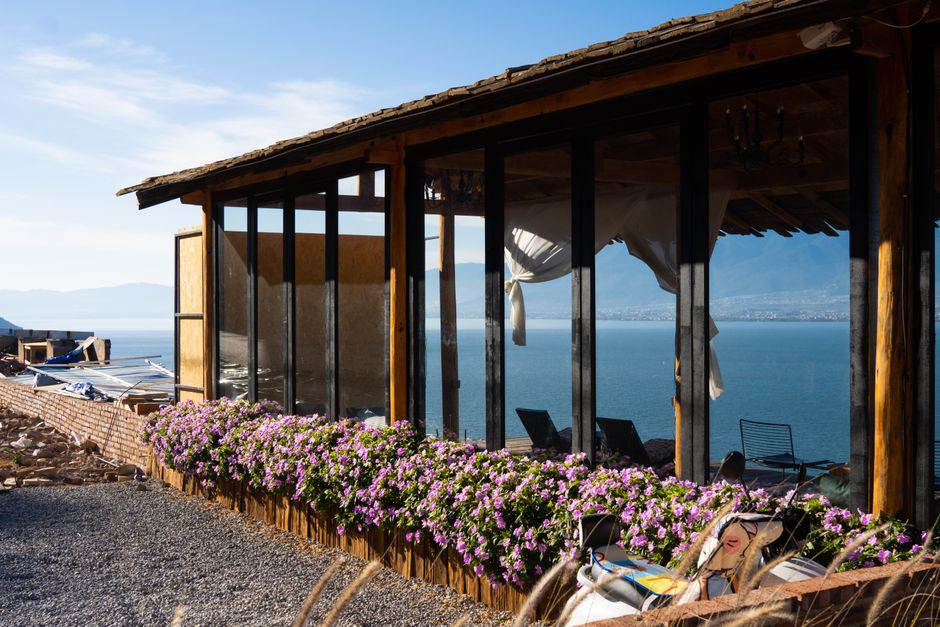
This is a practical section, not a product pitch. Eco-lodges in Costa Rica have specific laundry constraints. Most do not offer daily towel or linen changes. Pack two quick-dry towels if you are staying at a property with river access. A headlamp is non-negotiable for Osa Peninsula properties where paths are unlit after dark. Bring reef-safe sunscreen; standard chemical sunscreens are banned at several coastal ecolodges and they will confiscate them.
For power, a compact 10,000mAh power bank is useful at lodges where in-room outlets are limited or solar-dependent. You do not need a solar charger; the lodges already have solar infrastructure. You need a battery buffer for your own devices.
Where This Category Is Heading
The eco-boutique segment in Costa Rica is splitting into two tiers. The top tier — Lapa Rios, Pacuare, Nayara Tented Camp — is moving toward regenerative models that measure biodiversity outcomes, not just carbon footprints. The bottom tier is consolidating around the “eco-chic” aesthetic without the operational substance. By 2027, expect CST to tighten its auditing standards, which will force several well-known properties to either invest or drop the label. For travelers, the takeaway is simple: certification plus recent reviews plus full-journey pricing. That is the whole formula.
Related Post
Pet Food Comparison: How to Compare Pet Food: What the Labels Don’t Tell You
Around 40% of dog and cat owners switched their pet’s food at least twice in [...]
7-Day Iceland Ring Road Itinerary: The Real Route, Costs, and What Actually Goes Wrong
Seven days is the minimum for the Ring Road. Not the comfortable minimum. The actual [...]